

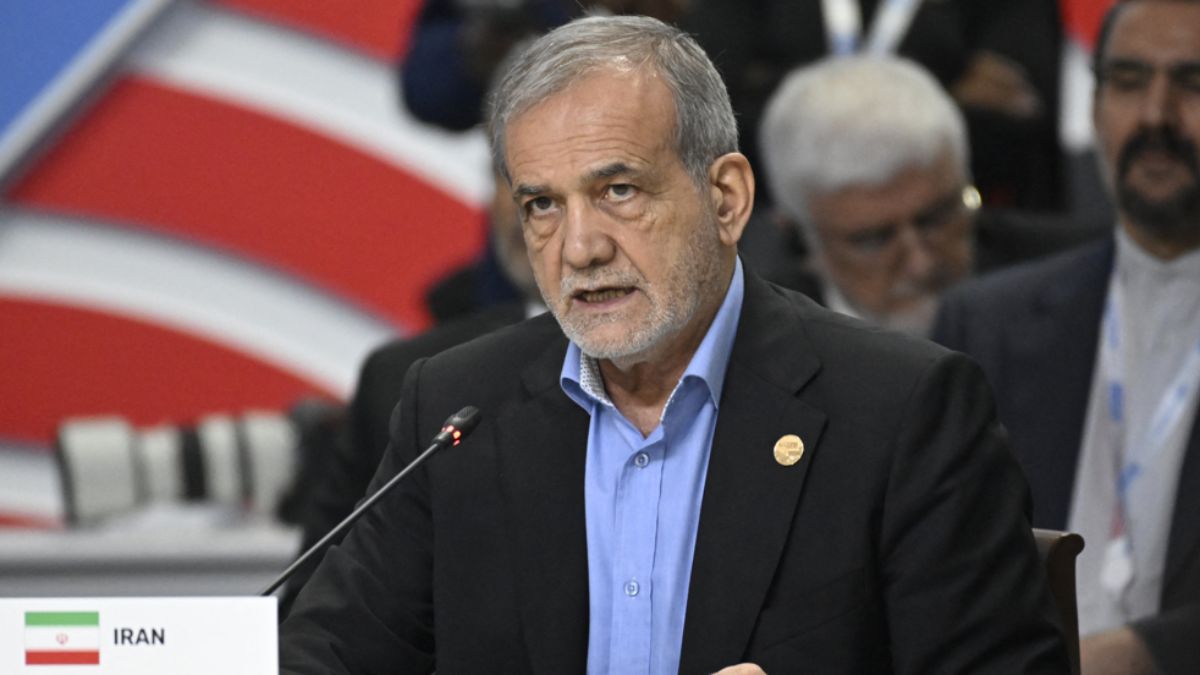
Iranian President Masoud Pezeshkian’s proposal for a BRICS-led stabilization role, conveyed during his call with PM Narendra Modi, marks a pivotal push toward de-dollarized trade frameworks, potentially rerouting $1 trillion in Eurasian commerce through rupee-rial settlements and sanctions-proof payment systems. Tehran’s ceasefire conditions immediate US-Israel halt plus guarantees signal readiness to integrate Iran’s $182 billion non-oil export capacity into BRICS+ networks, challenging SWIFT dominance amid frozen $20 billion assets.
BRICS intra-trade has surged to 90% local currency settlements by late 2025, per Russian government data, with Russia-China at near-total yuan-ruble execution and India-UAE pioneering rupee crude buys. Iran’s overture leverages India’s BRICS presidency to formalize rial/rupee corridors for $15 billion bilateral trade, building on 2023 precedents where India settled UAE oil in rupees. This bypasses dollar volatility, exacerbated by Hormuz risks inflating freight 20%.
Chabahar Port exemplifies the shift: India’s $120 million Phase-II investment (plus $250 million credit line, per DD News) positions it as Hormuz hedge, facilitating INSTC rail for Central Asia-Afghanistan cargo. Pre-conflict, Chabahar handled 2.5 million TEUs annually; de-escalation could triple volumes, channeling Iran’s pistachios, saffron, and petrochemicals ($40 billion potential) via rupee payments.
Global implications cascade : Europe’s $300 billion Middle East imports gain cost stability sans dollar sanctions risks, while China’s Belt & Road absorbs Iranian liquidity through CIPS. BRICS Pay and gold-backed “Unit” pilot (launched October 2025, 40% gold-backed) enable seamless cross-border flows, eroding USD’s 89% forex share. For India, onion/rice exports to Iran (up 15% YoY) multiply under rupee terms, shielding Viksit Bharat from rupee depreciation past 92/USD.
Critics note challenges rial’s 2026 collapse post-dollar wind-downs but Pezeshkian’s transparency pledge on peaceful nuclear program could unlock IMF relief, injecting rial liquidity. Modi’s navigation emphasis reinforces Chabahar-IMEEC as de-dollarized artery, potentially saving $50 billion in annual freight via normalized Gulf routes.
This diplomacy ties geopolitics to finance, ceasefire acceptance floods BRICS with Iranian capital, accelerating multipolar trade realignment and positioning India as pivot between West Asia and Global South.