

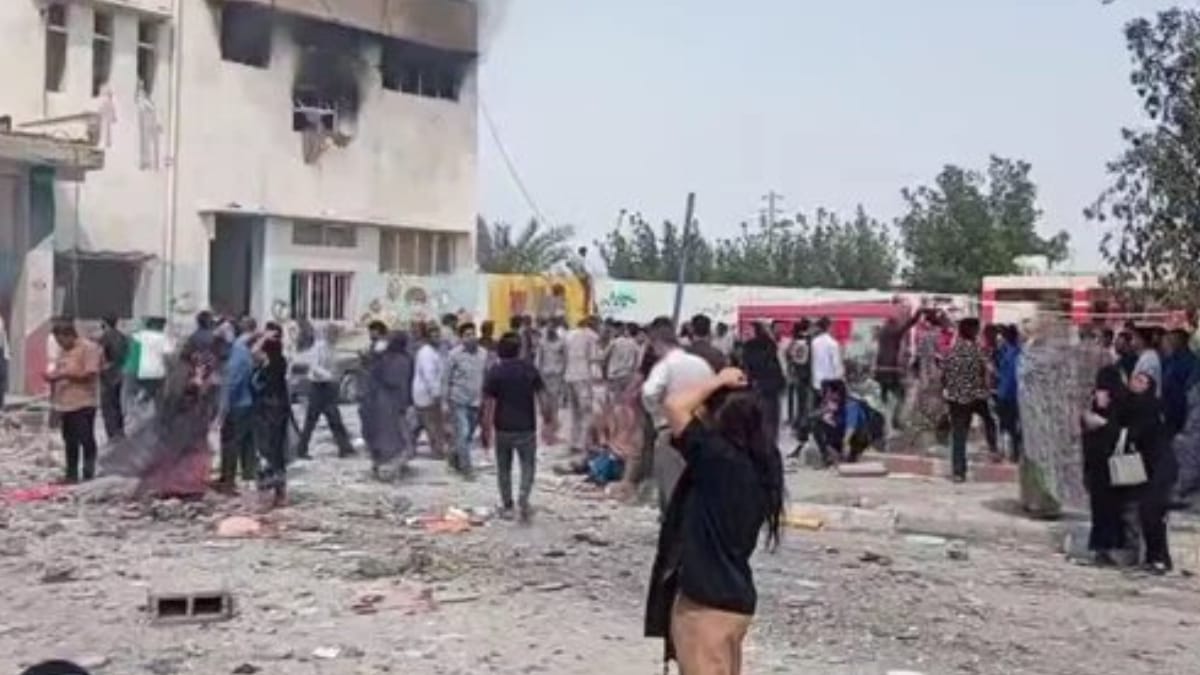
The reported death toll of sixty individuals, with a further eighty injured, following Israeli and United States airstrikes on a girls school in southern Iran, as communicated by Hossein Kermanpour, head of public relations at the Iranian Health Ministry, represents a moment of profound legal gravity and human tragedy. Beyond the immediate anguish of families and communities, and the devastating loss borne by the girls of Iran whose classrooms should have been sanctuaries of learning rather than sites of destruction, the incident demands rigorous scrutiny under international humanitarian law, the law governing the use of force, and the broader architecture of state responsibility.
At the outset, the applicable legal framework is twofold. First, the legality of the use of force against Iran must be assessed under the Charter of the United Nations. Secondly, the conduct of hostilities, assuming an armed conflict exists between the relevant states, must comply with international humanitarian law, particularly the Geneva Conventions of 1949 and their Additional Protocols. These are not abstract norms but binding legal obligations designed precisely to protect civilians, especially children, in times of war.
If the airstrikes were conducted without authorisation from the United Nations Security Council under Chapter VII of the Charter, their legality hinges on Article 51, which recognises the inherent right of self-defence in the event of an armed attack. Any invocation of self-defence must satisfy the stringent requirements of necessity and proportionality. Even where the initial resort to force is legally justified, subsequent operations must be strictly limited to what is required to repel or prevent the armed attack. An attack resulting in mass civilian casualties at a girls’ school would invite immediate questions as to whether these conditions were met in fact and in law.
Assuming the existence of an international armed conflict between the states concerned, the governing body of law is international humanitarian law. Central to this regime is the principle of distinction, codified in Article 48 of Additional Protocol I, which obliges parties to distinguish at all times between civilians and combatants and between civilian objects and military objectives. A girls’ school is prima facie a civilian object and enjoys protection from attack unless and for such time as it is used for military purposes. The burden rests heavily on the attacking party to demonstrate that the object had become a lawful military objective under Article 52 of Additional Protocol I, meaning that it made an effective contribution to military action and that its destruction offered a definite military advantage.
Even if a school was alleged to have been used for military purposes, the principle of proportionality under Article 51 of Additional Protocol I prohibits attacks which may be expected to cause incidental loss of civilian life excessive in relation to the concrete and direct military advantage anticipated. Sixty fatalities and eighty injuries in a girls school would demand a searching inquiry into the intelligence assessments, target verification procedures, and collateral damage estimates that preceded the strike. The rule of precautions in attack, contained in Article 57 of Additional Protocol I, further requires that all feasible precautions be taken to avoid or minimise incidental civilian harm. This includes verification of targets, choice of means and methods of warfare, and effective advance warnings where circumstances permit.
The specific targeting of educational facilities carries additional normative weight. While the Safe Schools Declaration is a political commitment rather than a binding treaty, it reflects an emerging consensus that schools must be shielded from military use and attack. Moreover, children are entitled to special protection under international humanitarian law and international human rights law, including the Convention on the Rights of the Child. The intersection of these regimes reinforces the expectation that states exercise heightened care when operations risk affecting minors. The reported deaths at a girls school thus resonate not only as a breach of general civilian protection but as a potential violation of the special safeguards accorded to children.
From the perspective of international criminal law, the Rome Statute of the International Criminal Court defines as war crimes intentionally directing attacks against the civilian population or against civilian objects, as well as launching attacks with knowledge that they will cause excessive incidental civilian loss. Whether the threshold of intent or knowledge is met would depend on detailed factual findings. Although jurisdictional questions may arise depending on the status of the states concerned in relation to the Court, the substantive norms remain authoritative indicators of criminal responsibility under customary international law.
State responsibility operates alongside individual criminal liability. Under the Articles on Responsibility of States for Internationally Wrongful Acts, a breach of an international obligation entails the duty to cease the wrongful conduct and to make full reparation for the injury caused. In practical terms, this could encompass public acknowledgment, compensation to victims, and guarantees of non repetition. While geopolitical realities often constrain formal adjudication, the legal entitlement of the injured state and affected individuals is clear in doctrine.
Strategically, the ramifications extend beyond bilateral confrontation. Civilian casualties of this magnitude risk regional escalation, galvanising public opinion, empowering hardline factions, and complicating diplomatic efforts at de escalation. The Middle East is already characterised by overlapping theatres of tension, and any perception of disregard for civilian life undermines the credibility of claims that operations are narrowly tailored or defensive in nature. International law functions not merely as a moral compass but as a stabilising instrument. When it is perceived to be violated, the deterrent value of legal norms diminishes and reciprocal cycles of force become more likely.
At the human level, however, legal analysis must not obscure the lived reality of the victims. The girls of Iran who entered their school expecting education and security were entitled, under the most basic tenets of international law, to protection from the violence of armed conflict. Their loss transforms legal principles into urgent imperatives. If the reports are accurate, the incident stands as a stark test of whether the international community is prepared to enforce the rules it has painstakingly constructed to shield civilians from the ravages of war.
The ultimate question is whether international humanitarian law will be rigorously applied, transparently investigated, and, where violations are established, meaningfully enforced. Without accountability and adherence to established norms, the promise embedded in the Geneva Conventions and the Charter of the United Nations risks erosion. With it, there remains at least the possibility that even in the midst of armed conflict, the law can offer some measure of restraint, justice, and dignity to those who suffer most.