

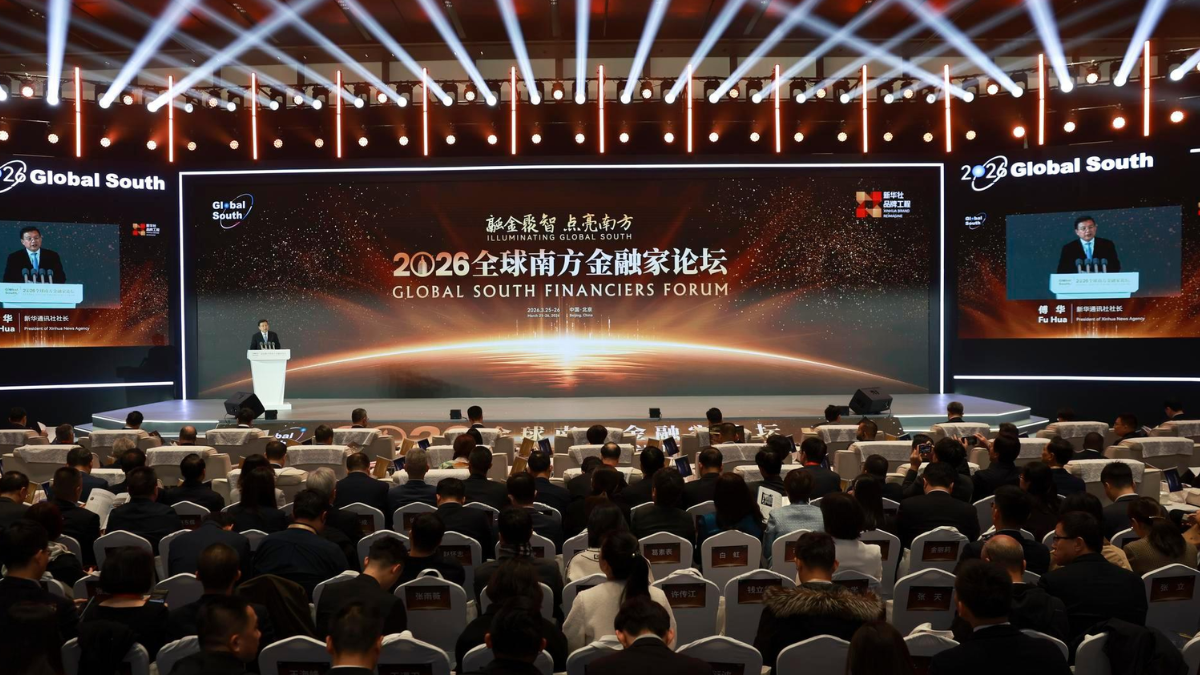
The opening of the 2026 Global South Financiers Forum in Beijing under the theme “Illuminating Global South” marks a significant moment in the evolving discourse on international economic governance, development finance and the redistribution of influence within the global financial architecture. Convening policymakers, financial experts and institutional stakeholders, the forum reflects a growing determination among emerging economies to assert a more prominent role in shaping global financial norms.
The legal and institutional implications of this development are substantial. The existing global financial system remains largely anchored in institutions established in the aftermath of the Second World War, including the International Monetary Fund and the World Bank, where governance structures have historically favoured advanced economies. The emergence of platforms such as the Global South Financiers Forum reflects a gradual shift towards a more pluralistic financial order in which developing nations seek greater representation and influence. This shift raises critical questions regarding the evolution of international financial law, particularly in relation to voting rights, lending frameworks and regulatory standards.
China’s role as host of the forum underscores its strategic positioning within this transformation. Over the past decade, Beijing has actively supported alternative financial mechanisms and multilateral institutions designed to complement or, in some cases, challenge existing frameworks. The forum provides an opportunity to consolidate these efforts by fostering dialogue among countries that share similar development priorities, including infrastructure financing, debt sustainability and access to capital. In doing so, it contributes to the broader process of redefining the rules that govern international finance.
The emphasis on amplifying the voice of the Global South also intersects with the legal principle of sovereign equality, a cornerstone of the United Nations Charter. While all states are formally equal under international law, disparities in economic power have often translated into unequal influence within global decision making bodies. Initiatives that seek to elevate the perspectives of developing countries therefore carry both symbolic and practical significance, as they challenge entrenched hierarchies and promote a more inclusive approach to governance.
At the same time, the forum highlights the complexities inherent in achieving such transformation. Divergent economic conditions, regulatory frameworks and political systems among Global South countries can complicate efforts to establish unified positions on key issues. Legal harmonisation remains a significant challenge, particularly in areas such as financial regulation, investment protection and dispute resolution. The success of initiatives emerging from the forum will depend on the ability of participating countries to navigate these differences while maintaining a shared commitment to cooperation.
From a real time perspective, the forum’s focus on development financing is particularly relevant as many emerging economies continue to face pressures related to debt, inflation and external shocks. The creation of alternative financing channels and the strengthening of South South cooperation mechanisms could provide critical support in addressing these challenges. However, such efforts must be accompanied by robust governance frameworks to ensure transparency, accountability and long term sustainability.
Ultimately, the 2026 Global South Financiers Forum represents more than a gathering of financial stakeholders. It reflects an ongoing recalibration of global economic governance in which emerging economies seek to assert their agency and redefine the parameters of international cooperation. As these dynamics continue to unfold, the interplay between legal principles, institutional reform and geopolitical strategy will determine the extent to which the aspirations of the Global South can be translated into tangible influence within the global financial system.