

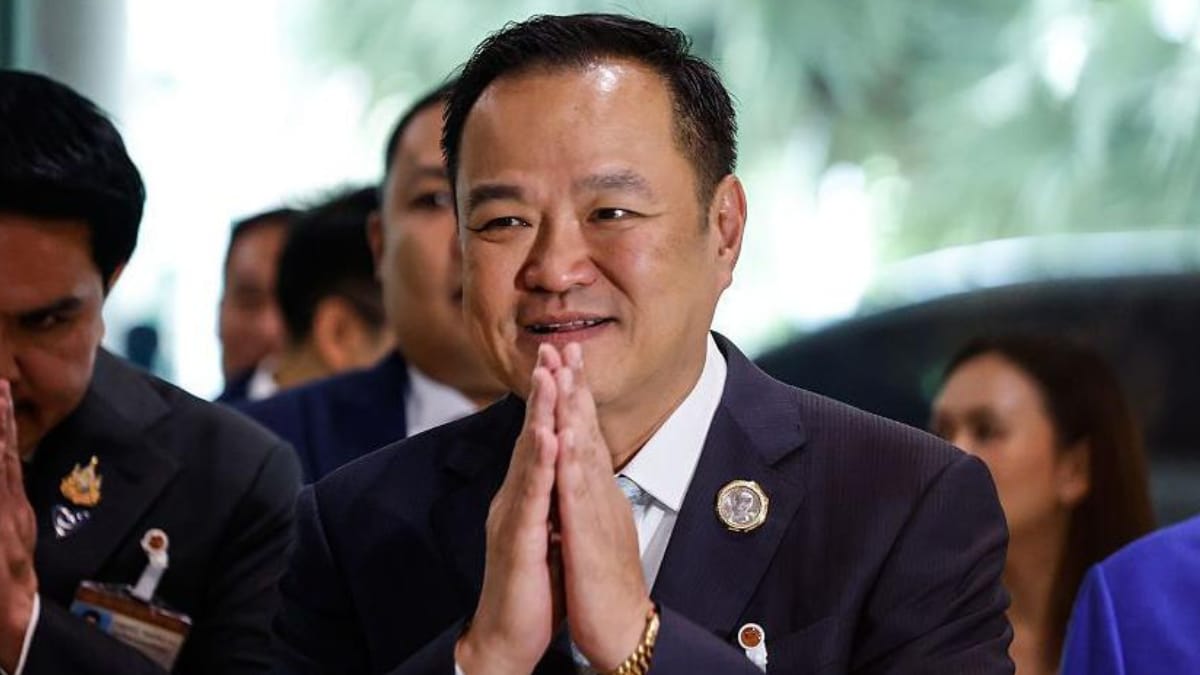
Anutin Charnvirakul has been re elected as the Prime Minister of Thailand after securing a simple majority in a decisive vote held in the House of Representatives on Thursday, marking a significant moment in the country’s evolving political landscape. Representing the Bhumjaithai Party, Anutin’s return to office reflects both parliamentary consolidation and the continued influence of coalition driven governance in Thailand’s political system.
The vote in the House of Representatives underscores the central role of parliamentary procedures in determining executive leadership within Thailand’s constitutional framework. A simple majority was sufficient to confirm Anutin’s leadership, highlighting the importance of coalition building and legislative support in a political environment often characterised by fragmented party representation. The Bhumjaithai Party, which has emerged as a key player in recent electoral cycles, played a decisive role in securing the numbers required for Anutin’s re election.
Anutin Charnvirakul is widely recognised for his administrative experience and pragmatic political approach. His leadership has previously been associated with a focus on public health policy, economic recovery and infrastructure development. Observers note that his return to office comes at a time when Thailand faces multiple challenges, including sustaining economic growth, attracting foreign investment and maintaining political stability in a region marked by shifting geopolitical dynamics.
The re election also reflects broader trends within Thai politics, where coalition governments and negotiated alliances remain central to governance. Unlike systems dominated by a single party majority, Thailand’s parliamentary structure often requires political actors to engage in continuous dialogue and compromise to maintain governing coalitions. This dynamic can both stabilise governance through inclusivity and create challenges when competing interests must be balanced within the executive framework.
From an economic perspective, Anutin’s leadership is expected to prioritise growth oriented policies aimed at strengthening Thailand’s position as a regional hub for trade and investment. The country remains one of Southeast Asia’s key economies, with strong manufacturing, tourism and export sectors. Policy continuity under Anutin’s administration may provide reassurance to investors seeking stability amid global economic uncertainty.
At the same time, governance challenges remain. Political analysts point to the need for effective policy implementation, institutional coordination and responsiveness to public concerns. Issues such as income inequality, regional development disparities and regulatory reform are likely to shape the government’s agenda in the coming months. The ability of Anutin’s administration to navigate these challenges will be closely watched both domestically and internationally.
The re election also carries implications for Thailand’s foreign policy. As a member of regional groupings such as the Association of Southeast Asian Nations, Thailand plays an important role in regional diplomacy and economic cooperation. Continuity in leadership may support ongoing initiatives related to trade, connectivity and regional stability.
Ultimately, Anutin Charnvirakul’s return as Prime Minister signals a continuation of coalition based governance within Thailand’s parliamentary system. The outcome reflects the interplay between electoral politics, legislative procedure and strategic alliance building that defines the country’s political environment. As the new term begins, attention will turn to how effectively the government translates parliamentary support into tangible policy outcomes that address both domestic priorities and international expectations.