

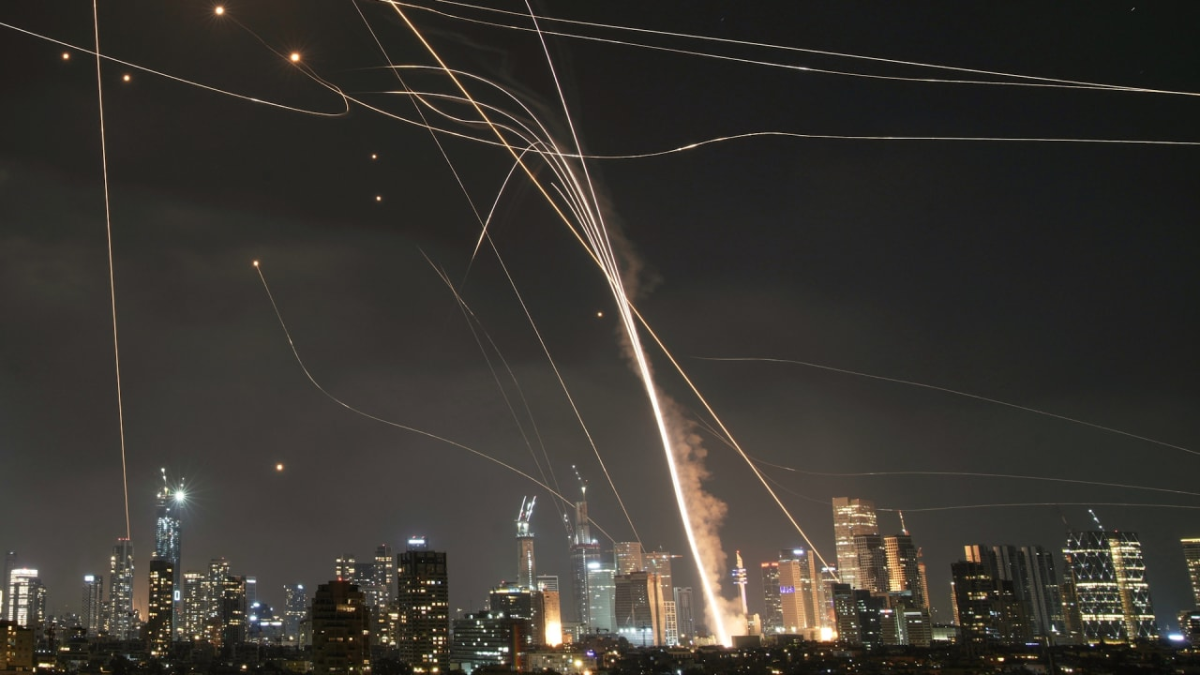
Reports indicating that missiles launched by the United States against Iran may have originated from Gulf territories introduce a highly sensitive legal and geopolitical dilemma. The suggestion that regional states facilitated such operations while publicly denying involvement places the issue at the centre of international law concerning state responsibility, neutrality, and the lawful use of force. The lack of official acknowledgment does not negate the potential legal implications of territorial use for military operations. Instead, it creates a complex evidentiary and diplomatic environment in which attribution, consent, and accountability become contested.
Sovereignty and the legal implications of territorial use
Under established principles of international law, a state’s territory may not be used by another state for acts that violate the rights of a third state without lawful justification. If Gulf states permitted the use of their land or airspace for strikes against Iran, such consent would have significant legal consequences. Consent, when validly given, can render actions that would otherwise be unlawful permissible under international law. However, the scope of such consent must be clearly established and must not contravene peremptory norms. If consent is absent or coerced, the use of territory could constitute a breach of sovereignty. The ambiguity surrounding whether Gulf states authorised the strikes complicates the legal analysis and raises questions about implicit or covert consent.
State responsibility and indirect participation in hostilities
The doctrine of state responsibility provides that a state may be held internationally responsible if it knowingly aids or assists another state in the commission of an internationally wrongful act. This principle, reflected in customary international law and codified in the Articles on Responsibility of States for Internationally Wrongful Acts, is central to assessing the liability of third-party states. If Gulf states provided logistical support, access to bases or airspace, they may be considered participants in the conflict, even in the absence of direct military engagement. Such involvement could expose them to legal claims and potential countermeasures. The threshold for establishing such responsibility depends on knowledge and intent, both of which are often difficult to prove in covert operations.
Neutrality law and the erosion of non-participation
Traditional neutrality law requires states not party to a conflict to refrain from assisting belligerents. Allowing the use of territory for military operations generally constitutes a violation of neutrality, transforming the state into a participant in the conflict. The modern international system, however, has seen a gradual erosion of strict neutrality, particularly in conflicts involving collective security arrangements or strategic alliances. Gulf states, facing direct threats from Iranian missile and drone attacks, may argue that their actions are justified as part of collective self-defence. This argument would need to satisfy the requirements of necessity and proportionality under the United Nations Charter.
Self-defence and regional security dynamics
The involvement of Gulf states must also be analysed in the context of self-defence. If these states have been subjected to attacks by Iranian forces, they may invoke Article fifty one of the United Nations Charter to justify cooperation with the United States. Collective self-defence permits states to assist one another in responding to armed attacks, provided that the response is proportionate and necessary. The use of territory for launching strikes could therefore be framed as part of a broader defensive strategy. However, the extension of self-defence to offensive operations against Iranian targets remains legally contentious, particularly where the connection to an immediate threat is not clearly established.
Airspace law and the legality of cross-border operations
The use of airspace for military operations engages principles of international aviation law, including those codified in the Chicago Convention on International Civil Aviation. States possess complete sovereignty over their airspace and must authorise any foreign military activity within it. Unauthorised use of airspace would constitute a violation of sovereignty, while authorised use raises questions about the legality of the underlying operation. The dual layer of consent and legality creates a complex framework for assessing responsibility.
Strategic ambiguity and diplomatic consequences
The refusal of Gulf states to publicly acknowledge their role reflects a strategy of plausible deniability aimed at minimising domestic and regional backlash. This approach allows states to balance security cooperation with the United States against the risk of retaliation from Iran. However, such ambiguity can undermine transparency and accountability, complicating efforts to resolve disputes through diplomatic channels. It may also increase the risk of escalation, as Iran may respond based on perceived rather than confirmed involvement. The situation illustrates the challenges of managing alliances and security partnerships in a volatile regional environment.
Conclusion: Covert cooperation and the strain on international legal norms
The alleged use of Gulf territory for United States missile strikes against Iran highlights the evolving nature of modern conflict, where overt actions are often accompanied by covert support. The legal framework governing such situations remains complex and, in many respects, underdeveloped. Questions of consent, responsibility, and neutrality are central to understanding the implications of these developments. As states navigate the intersection of security imperatives and legal constraints, the need for clarity and adherence to international norms becomes increasingly important. The episode serves as a reminder that the boundaries of lawful conduct in international relations are continually tested by the realities of geopolitical competition.