

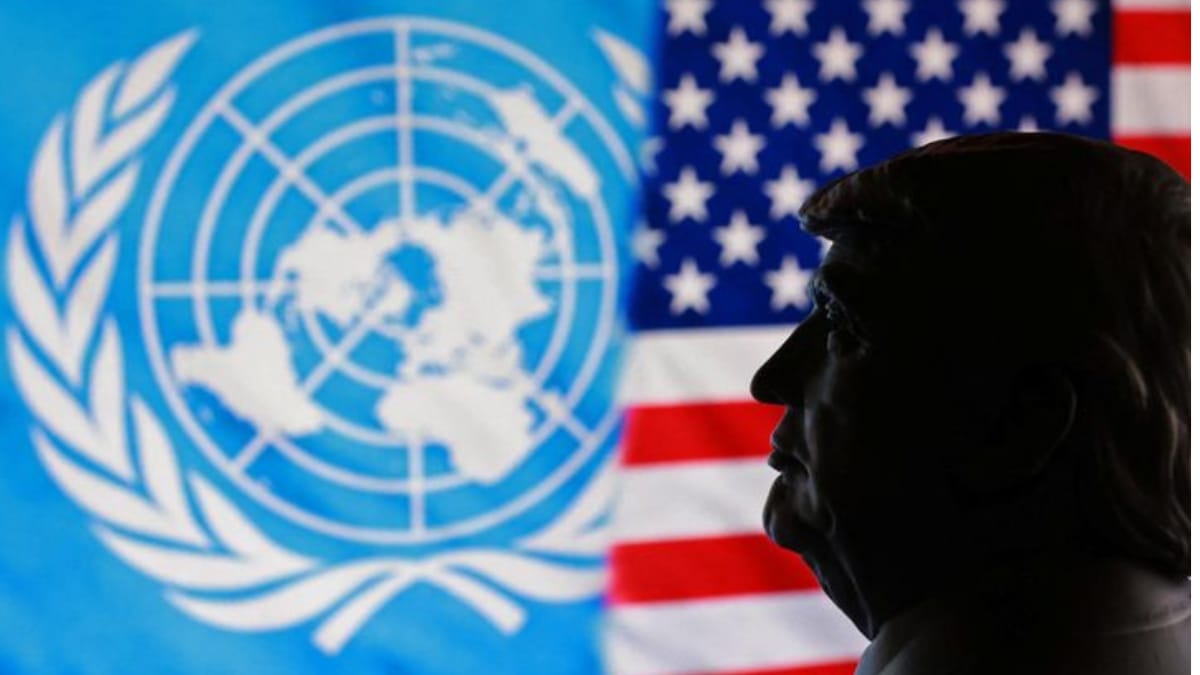
Claims that the United States has conducted two invasions within the span of two months, with reference to Iran and Venezuela alongside Israel, demand rigorous legal scrutiny rather than rhetorical amplification. In contemporary international law, the term invasion carries a specific meaning associated with the unlawful use of armed force against the territorial integrity or political independence of another state. Article 2, paragraph 4 of the United Nations Charter establishes a near absolute prohibition on the use of force, permitting exceptions only in cases of self-defence under Article 51 or where the United Nations Security Council authorises collective action. Any assertion of invasion must therefore be measured against these binding legal standards rather than political characterisation.
If United States military operations were undertaken against targets in Iran, the legal analysis would hinge upon whether Washington invoked individual or collective self-defence, including the necessity and proportionality requirements embedded in customary international law. The International Court of Justice has repeatedly affirmed that self-defence must respond to an armed attack and must be limited to what is necessary to repel that attack. Preemptive or preventive doctrines remain deeply contested within international jurisprudence. Absent credible evidence of an imminent armed attack attributable to Iran, large scale cross border force would be difficult to reconcile with the Charter framework.
With respect to Venezuela, any direct military intervention without Security Council authorisation would raise equally grave legal concerns. Historical precedents in Latin America, including the United States intervention in Panama in 1989, were heavily criticised within the General Assembly as violations of sovereignty. The doctrine of humanitarian intervention, sometimes invoked to justify force absent Council authorisation, lacks clear codification in treaty law and remains controversial. The responsibility to protect doctrine, endorsed in principle at the 2005 World Summit, still requires Security Council approval for collective military enforcement action.
Israel’s involvement in any joint operation further complicates attribution and collective self defence analysis. Under the law of state responsibility, coordinated military action may generate shared responsibility if conducted pursuant to a common plan. Moreover, the prohibition on aggression as defined in the Rome Statute of the International Criminal Court criminalises the planning or execution of acts that constitute a manifest violation of the Charter.
Beyond strict legality, the geopolitical ramifications are profound. Military action against Iran would reverberate across the Middle East, affecting energy markets and regional alliances. Intervention in Venezuela would destabilise an already fragile political and economic environment in South America. In both theatres, escalation risks widening conflict and eroding confidence in multilateral governance mechanisms.
The broader concern is systemic. If major powers increasingly interpret security exceptions expansively, the normative restraint embedded in the Charter risks erosion. The credibility of the Security Council, already strained by veto politics, would be further weakened if unilateral uses of force become normalised. For the international legal order, the issue is not merely the factual accuracy of invasion claims but whether the foundational prohibition on force retains practical authority in an era of strategic rivalry.