

China has pledged $1.1 million in fresh funding to support trade integration and capacity building for developing and least-developed countries (LDCs), reinforcing its role in strengthening the multilateral trading system ahead of key global trade discussions.
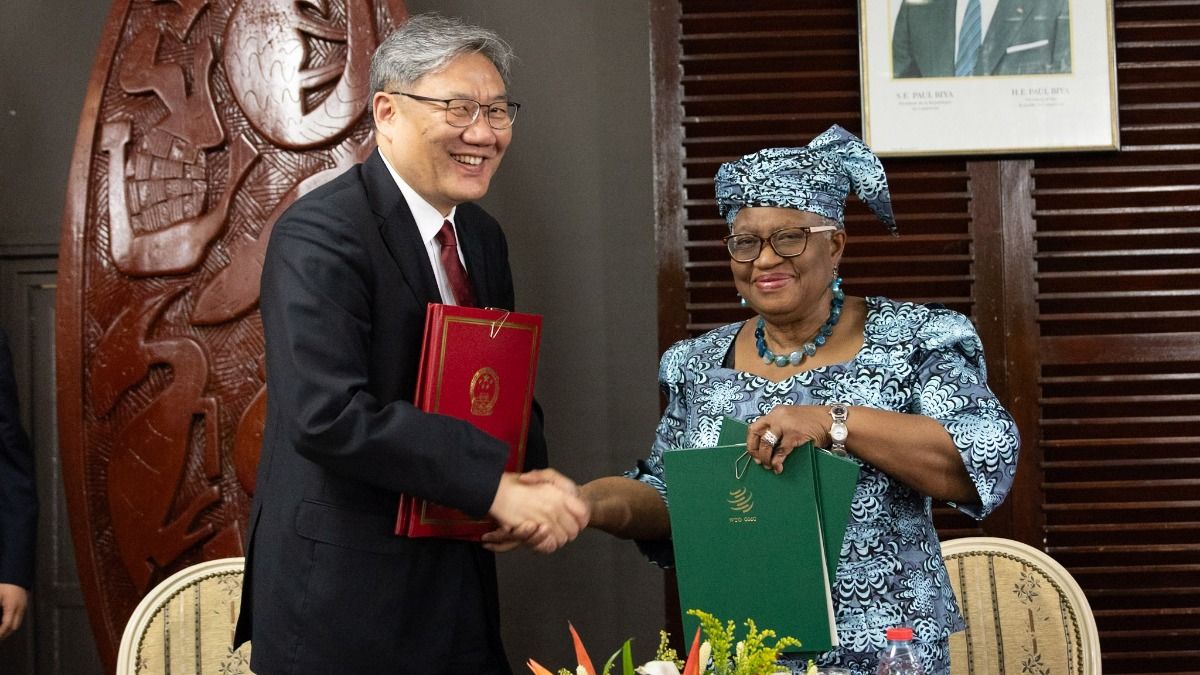
The funding commitment was formalized through two memoranda of understanding signed between Ngozi Okonjo-Iweala and Wang Wentao on the sidelines of the WTO Ministerial Conference MC14. According to official information released through multilateral trade sources, the contribution is divided between two major initiatives aimed at enhancing trade participation and institutional capacity in developing economies.
A sum of $600,000 has been allocated to the “China Programme,” a WTO-led initiative launched in 2011 under the Aid for Trade framework. The programme focuses on helping LDCs integrate into the global trading system by strengthening their participation in WTO processes and supporting countries seeking accession to the organization.
The China Programme funds a range of activities designed to improve trade readiness and institutional capacity. These include internship programmes at the World Trade Organization, technical workshops, and roundtable discussions on accession processes. It also supports participation of LDC officials in WTO meetings and ministerial conferences, enabling greater representation in global trade negotiations. Additional initiatives under the programme include South-South dialogue platforms, follow-up workshops linked to Trade Policy Reviews, and capacity-building efforts focused on emerging areas such as digital trade and artificial intelligence.
The remaining $500,000 will be directed to the WTO’s Global Trust Fund, which finances a broad spectrum of technical assistance and training activities for developing and least-developed members. These programmes cover key areas such as trade negotiations, agriculture, standards compliance, and digital trade governance. The fund also supports both online and in-person training at national and regional levels, helping countries build the expertise required to engage effectively in global commerce.
WTO Director-General Ngozi Okonjo-Iweala welcomed the contribution, emphasizing its importance at a time when demand for technical assistance is rising. She noted that the funding would help address resource gaps and enable the WTO Secretariat to expand support for developing members, particularly in areas critical to improving trade competitiveness and economic development.
China’s Commerce Minister Wang Wentao highlighted that the country has consistently supported WTO capacity-building initiatives, particularly for LDCs. He stated that increasing the allocation to the China Programme reflects China’s commitment to helping developing economies better integrate into the multilateral trading system. He also indicated that China would continue contributing to such initiatives in the future as part of broader development cooperation efforts.
The latest contribution builds on China’s long-standing financial support to WTO programmes. Since 2008, China has contributed more than $11 million to assist developing economies and LDCs in strengthening their participation in global trade. This also marks the second consecutive year that China has provided funding to the Global Trust Fund.
Trade experts note that such contributions play a critical role in narrowing the capacity gap between developed and developing countries. Limited technical expertise, regulatory challenges, and lack of institutional capacity often prevent LDCs from fully utilizing trade opportunities. By supporting training, data systems, and policy development, these programmes help countries improve market access and participation in global value chains.
The funding also comes at a time when the global trading system faces multiple challenges, including geopolitical tensions, supply chain disruptions, and evolving digital trade dynamics. Strengthening the ability of developing countries to engage in trade is seen as essential for ensuring inclusive and balanced global growth.
With increasing focus on areas such as digital trade, services, and sustainable development, capacity-building initiatives are becoming more critical to enabling countries to adapt to changing trade patterns. The China Programme and the Global Trust Fund are expected to play a key role in supporting this transition.
As WTO members prepare for ongoing negotiations and reforms, China’s contribution underscores the importance of sustained financial and institutional support to maintain an effective and inclusive multilateral trading system. The move is likely to enhance participation of LDCs in global trade processes while strengthening the overall resilience of the international trade framework.