

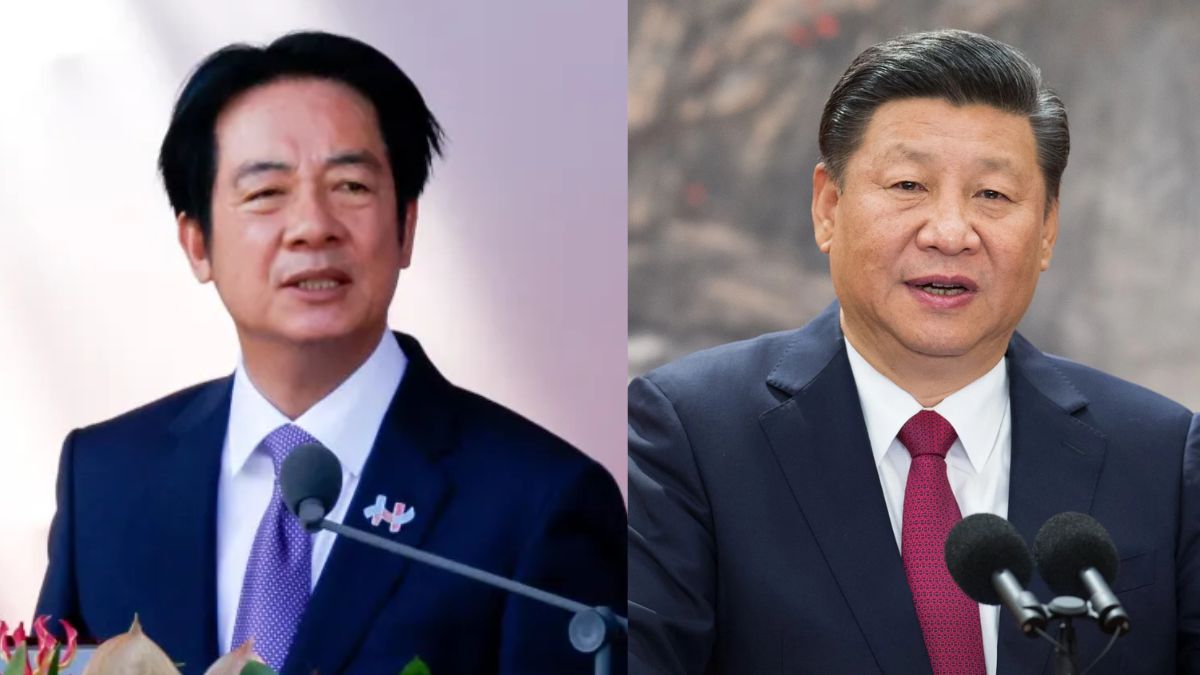
China’s intensified naval patrols around Taiwan in March 2026, coinciding with ongoing U.S. military strikes on Iran, have triggered speculation in strategic circles: could Washington’s preoccupation in the Middle East embolden Beijing to attempt an invasion? While rumors have gained traction especially as PLA aircraft continue to swarm Taiwan’s Air Defense Identification Zone (ADIZ) verified government-backed assessments suggest the risk remains limited, with probabilities for 2026 estimated between 8% and 11%.
According to a March 19 report by the Office of the Director of National Intelligence, there is no evidence indicating that Xi Jinping has authorized or is preparing for a full-scale invasion of Taiwan before 2027. The report highlights the severe economic consequences China could face, including potential exclusion from global financial systems such as SWIFT, which would significantly disrupt its trade-dependent economy.
Market-based indicators echo this cautious outlook. Prediction platform Polymarket currently places the likelihood of a Chinese invasion of Taiwan by September 2026 at 8%, rising modestly to 11% by year-end figures that have declined amid heightened U.S. focus on Iran. Analysts at the Australian Strategic Policy Institute argue that Beijing is more likely to pursue coercive tactics such as blockades or sustained military pressure rather than a high-risk amphibious assault, citing the People’s Liberation Army’s limited readiness for cross-strait operations in the near term.
The theory that Iran could serve as a strategic distraction for China finds little support among experts. Analyses, including those from Asia Times, indicate that Beijing remains committed to avoiding entanglement in Middle Eastern conflicts. Official statements from China’s Foreign Ministry emphasize a doctrine of “strategic autonomy,” while assessments noted by Forbes suggest China is unlikely to provide military assistance to Iran, prioritizing stable economic ties with the United States.
Meanwhile, U.S. defense posture does not indicate a weakening of Indo-Pacific commitments. The United States Department of Defense has maintained that it will avoid ground troop involvement in Iran, preserving flexibility to deploy assets in the Pacific. Ongoing exercises by the U.S. Seventh Fleet reinforce deterrence messaging toward China.
Japan’s role remains significant but limited without U.S. leadership. Under its updated 2023 National Security Strategy, Japan identifies a Taiwan contingency as a threat to its “national survival,” prompting fortification efforts in the Ryukyu island chain. However, under Article 5 of the U.S.-Japan Security Treaty, Tokyo’s actions are closely tied to Washington’s decisions, underscoring its supportive but not independent role in a potential conflict.
From a legal standpoint, Taiwan retains a strong defensive framework. The United Nations Charter’s Article 51 affirms the inherent right to self-defense, while the Taiwan Relations Act commits the United States to provide arms sufficient for Taiwan’s self-defense capabilities. U.S. State Department policy continues to oppose any unilateral attempt to alter Taiwan’s status by force. Although the Act does not obligate direct military intervention, policy signals from the Biden administration have emphasized a willingness to respond to aggression.
Risk factors, however, persist. China’s 2026 military modernization milestones and long-term strategic goals could incentivize assertive actions. Yet Taiwan’s “porcupine defense” strategy focused on asymmetric warfare capabilities, including missiles and reserve forces raises the cost of invasion significantly. Legislative measures such as the PROTECT Taiwan Act, introduced in the U.S. House in February 2026, further strengthen deterrence through potential sanctions.
Alternative scenarios continue to favor restraint. Should tensions in Iran escalate further, U.S. naval deployments could shift toward the Strait of Hormuz, according to Indo-Pacific Command assessments, but not at the expense of abandoning Pacific deterrence. Notably, the absence of escalatory rhetoric from both Taipei and Beijing suggests a calibrated posture rather than imminent conflict.
The “distraction thesis” appears overstated. Cross-verified governmental and institutional assessments from U.S. intelligence to Japanese defense policy and international legal frameworks point to a low probability of invasion in 2026. Beijing appears focused on strategic pressure rather than outright conflict, probing the status quo without crossing the threshold into war.