

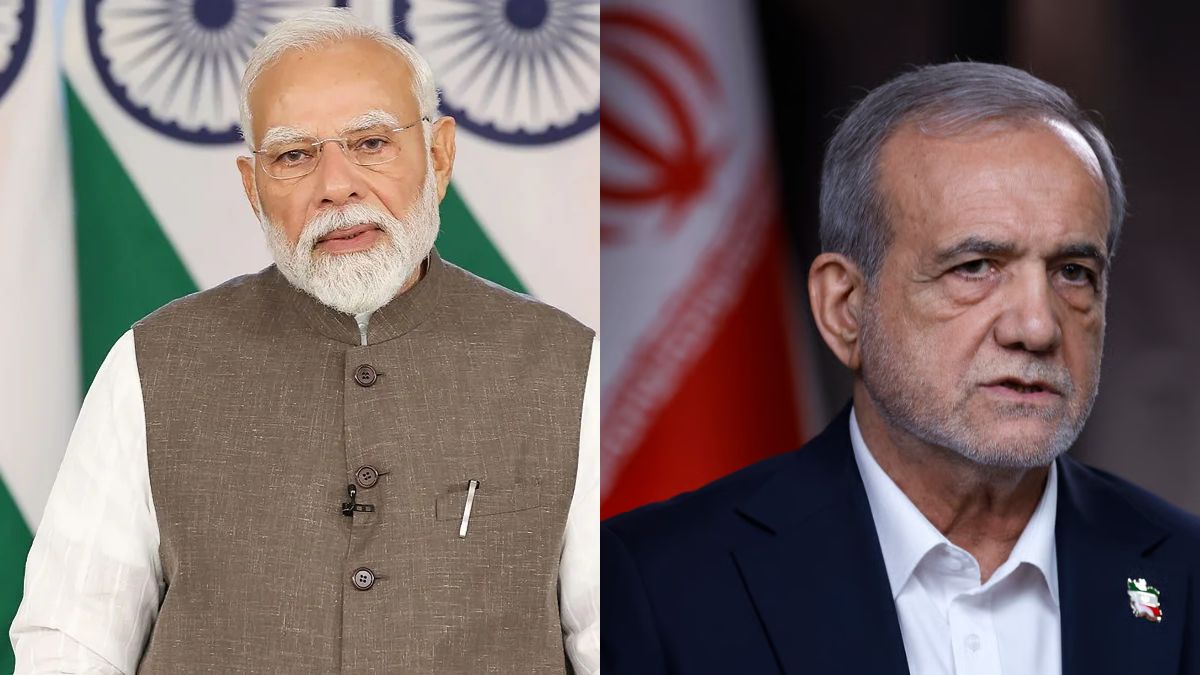
Iran has outlined a set of conditions to end its conflict with the United States and Israel during a telephonic conversation between Narendra Modi and Masoud Pezeshkian, a move that is reverberating across global energy markets and trade networks.
According to the Iranian presidency, Pezeshkian stated that an “immediate cessation of aggressions” by the US and Israel is essential to end the conflict. He further demanded credible guarantees against future military actions, indicating that Tehran seeks a long-term security framework rather than a temporary truce.
The Iranian President also proposed a region-led security mechanism in West Asia, excluding foreign powers, and expressed that BRICS could play a stabilising role in resolving the crisis.
Rejecting Western claims about Iran’s nuclear intentions, Pezeshkian reiterated that Iran’s leadership, including Ali Khamenei, opposes nuclear weapons development. He also dismissed earlier assertions by Donald Trump that the conflict is linked to Tehran’s nuclear ambitions.
Global Trade Routes and Oil Markets on Edge
The developments have drawn immediate attention from global markets, particularly due to risks surrounding the Strait of Hormuz, one of the world’s most critical oil chokepoints, handling nearly 20% of global oil trade.
Any uncertainty linked to Iran’s conditions or escalation in the conflict is likely to:
- Drive oil price volatility due to supply risks
- Increase shipping and insurance costs across Gulf routes
- Disrupt global supply chains, especially energy-dependent sectors
Energy-importing regions including Europe and Asia remain particularly vulnerable, as even minor disruptions in Hormuz flows can trigger inflationary pressures and industrial slowdowns.
Official Signals: Security and Stability Concerns
From the Indian side, official statements indicated that Modi stressed the importance of maintaining secure maritime routes and uninterrupted trade flows. He cautioned that attacks on critical infrastructure could destabilise the region and impact global supply chains, while reaffirming the need for freedom of navigation.
Iran, in its official communication, also emphasised that continued hostilities threaten broader regional stability and called for diplomatic engagement involving global stakeholders.
Strategic and Economic Implications
Iran’s proposal for a regional security framework and its reference to BRICS point toward a broader geopolitical shift with economic implications:
- Potential realignment of trade blocs and financial systems
- Increased push for non-Western trade mechanisms
- Possibility of sanctions recalibration, which could impact global oil supply
Strategic Trade Winners
- Europe/Asia Importers: $10/barrel oil drop lifts consumer spending 2-3%.
- Shipping Giants: Freight normalization saves $50B annually.
- Iran Non-Oil Surge: $182B latent capacity via Chabahar revival.
- Commodities Downstream: Fertilizer relief curbs food inflation 5%.
India’s neutral brokerage, flagging infrastructure attacks while backing Hormuz security positions Chabahar/IMEEC as post-ceasefire trade corridors, shielding Viksit Bharat exports amid global realignment if talks hold
If Iran’s conditions are met and tensions ease, markets could see stabilisation in crude prices and improved investor confidence. However, failure to reach consensus may escalate risks, tightening energy supplies and increasing volatility across equities, commodities, and currency markets.
As diplomatic engagement continues, Iran’s ceasefire conditions have effectively tied geopolitical negotiations to global economic stability. The outcome will not only shape regional security dynamics but also determine the trajectory of global trade flows and energy markets in the near term.