

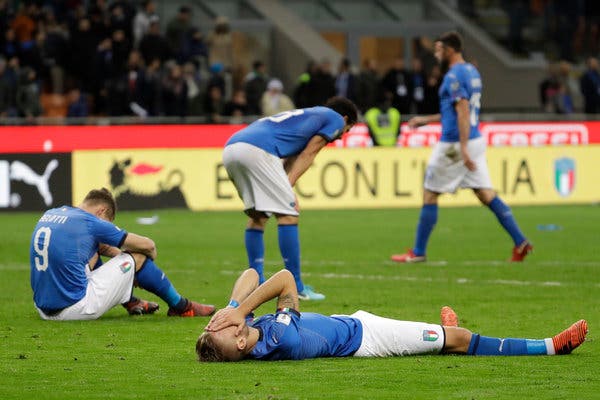
Four-time FIFA World Cup champions Italy have once again failed to reach the global showpiece, crashing out in the 2026 World Cup European playoff final against Bosnia and Herzegovina on March 31, 2026. The Azzurri drew 1-1 after extra time in Zenica before losing 4-1 on penalties, marking an unprecedented third consecutive qualification failure.
Moise Kean opened the scoring early with a stylish finish, giving Italy hope in a hostile atmosphere at the compact Bilino Polje Stadium. However, their plans unraveled when defender Alessandro Bastoni was dismissed with a straight red card shortly before halftime, leaving the visitors a man short for most of the contest.
Bosnia fought back bravely, with substitute Haris Tabakovic netting the equalizer in the 79th minute to force extra time. Neither team found a winner in the additional period, setting the stage for a nerve-wracking shootout. Pio Esposito and Bryan Cristante saw their penalties saved or missed for Italy, while Esmir Bajraktarević a player born in the United States who switched allegiance stepped up to fire home the decisive kick for the hosts.
This latest setback follows similar playoff disappointments against Sweden in 2018 and North Macedonia in 2022. Italy had shown promise by defeating Northern Ireland 2-0 in the semi-final and enjoying a strong mid-qualifying run under coach Gennaro Gattuso, but ultimately finished second in their group behind Norway.
Defender Leonardo Spinazzola voiced the collective heartbreak: the outcome feels unbelievable and painful not just for the squad and their loved ones, but especially for young fans who have never witnessed Italy competing at the World Cup.
Bosnia and Herzegovina, ranked far lower, now head to the expanded 48-team tournament in North America. They will feature in Group B with co-host Canada, Qatar, and Switzerland — their second appearance after debuting in 2014.
For Italy, whose last World Cup participation was in 2014, this extends their absence to at least 16 years since their 2006 triumph. The result has sparked fresh debates about rebuilding the national team setup, improving youth pathways, and addressing on-field vulnerabilities exposed against determined underdogs.
As the 2026 FIFA World Cup approaches without the Azzurri, Italian football faces a critical period of reflection and renewal to restore its proud legacy.