
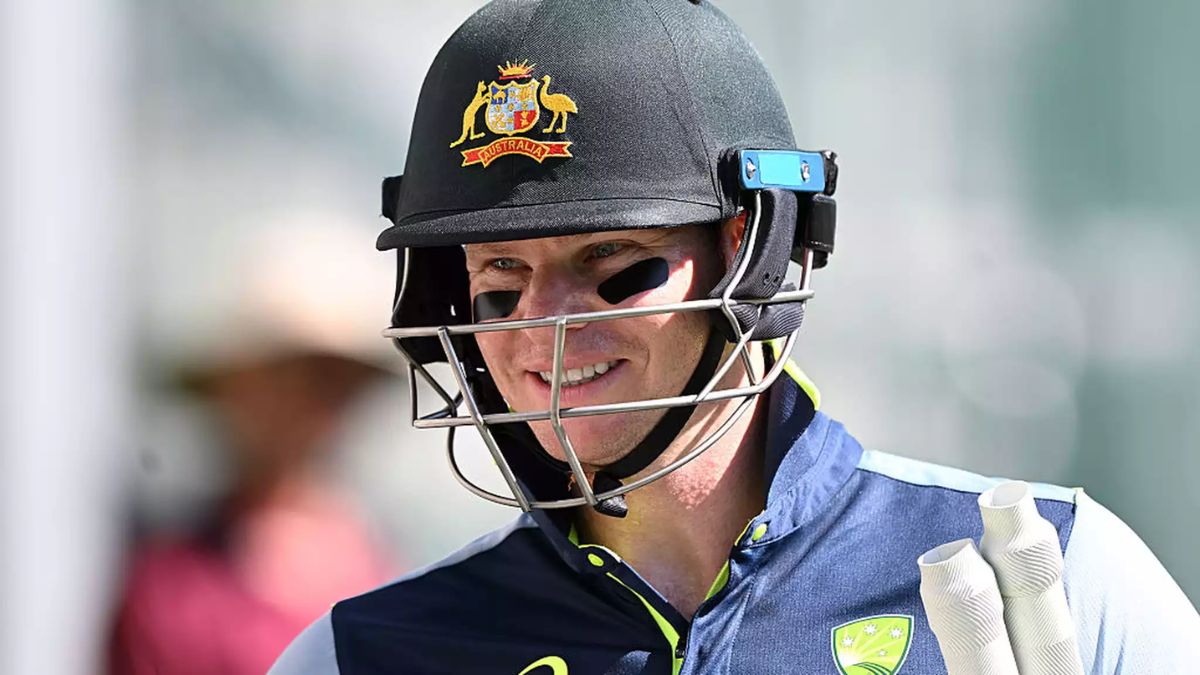
Australia’s star batter Steve Smith was seen sporting unusual black strips of tape under his eyes during a training session at the Gabba ahead of the second Ashes Test — and it immediately sparked curiosity across the cricket world.
The day-night Test in Brisbane will be played under floodlights with a pink ball, and Smith has been experimenting with what is commonly known as “eye black.” The method, famously used by former West Indies great Shivnarine Chanderpaul, is meant to reduce glare and enhance contrast while batting.
Smith was photographed wearing the patches during a nets session, preparing for long spells under the lights where reflection from the pitch can make picking the ball difficult.
What does ‘eye black’ actually do?
The practice originates from American sports such as American football, baseball and lacrosse, where athletes apply black paint or tape under their eyes to cut down glare. Legends like Babe Ruth and Tom Brady have used it for decades.
Australia teammate Marnus Labuschagne said there must be “some sort of science” behind it, adding that glare from the wicket could make tracking the ball harder at night.
“It might help pick the ball up better,” Labuschagne said. “Even if it’s placebo, if it feels like it works — it works.”
Does it really help? Studies are mixed
Over the years, several tests have tried to determine if eye black actually works:
- MythBusters (2008): No major difference compared to light-coloured make-up. Glare slightly reduced when paired with a cap, but not fully eliminated.
- Yale University study: Found improved contrast sensitivity and reduced glare, although results were subject to learning bias.
- University of New Hampshire study: Found no significant improvement due to small sample size, but suggested eye black may have some effect at short distances.
So why is Smith using it?
With a pink ball, bright lights and a reflective surface at the Gabba, Smith appears to be trying anything that could give him even a marginal visual advantage — or at least feel like it does.
Whether it’s science or psychology, one thing is certain: all eyes will be on whether he walks out in the Test with the same black patches — just like Chanderpaul once did.