
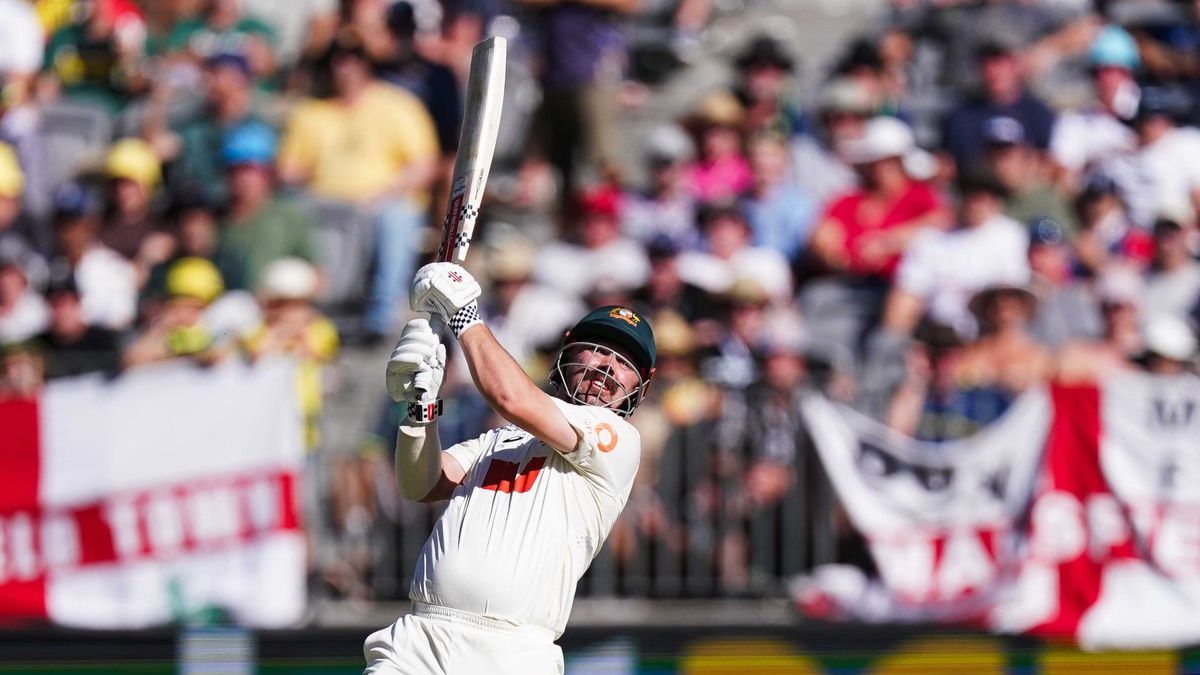
Australia began their chase of 205 with an unexpected opening pair — Travis Head and debutant Jake Weatherald, instead of the experienced Usman Khawaja. The reason is tied directly to Khawaja’s time spent off the field earlier in England’s innings.
Khawaja had walked off gingerly during England’s collapse at 93/6, requiring brief attention and missing a significant chunk of play. Under ICC playing conditions, a batter who has been off the field for extended periods cannot open the batting and must wait the equivalent amount of time before coming in.
This is the second time in the match Khawaja has been affected by this rule — it happened in the first innings as well, where he also could not open.
Why exactly couldn’t Khawaja open?
-
Khawaja spent too long off the field due to discomfort and treatment.
-
The playing conditions state that a fielder who is absent must wait the same duration after the team begins batting before being allowed to bat.
-
Since Australia’s innings began before that waiting period expired, Travis Head was forced to step in as stand-in opener.
Will Khawaja bat later?
Yes — unlike the first innings (where he was off the field even longer), this time his absence was not as prolonged. He is expected to return to the crease once he completes the waiting period and once a wicket falls.
There is no injury concern serious enough to rule him out; this is purely a timing restriction.
Match situation
-
England: 172 & 164
-
Australia need: 205 runs to win
-
Mitchell Starc has produced a sensational match with 10/78, becoming the first Australian seamer since Craig McDermott in 1990–91 to claim a ten-wicket haul in an Ashes Test.
-
England were bowled out under 200 in both innings — a scenario in which they’ve won only one Test in the last 100 years.
With Head and Weatherald beginning the chase against Jofra Archer under overcast skies, all eyes will turn to when Khawaja eventually joins the middle — and how Australia approach a tricky run chase on a lively Perth pitch.