

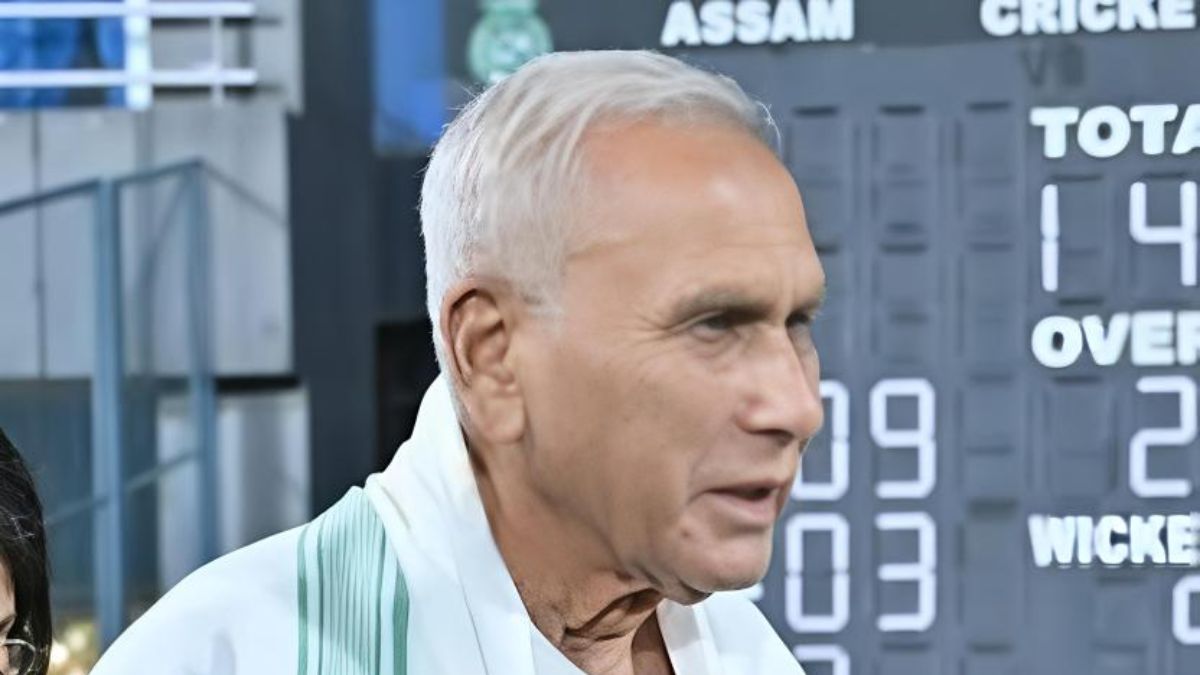
Badal Thakur was 94 years old when he passed away on Sunday evening at his residence in Barowari, Assam. He was the kind of cricketer whose name does not appear in television commentary boxes or IPL franchise branding exercises — but without whom the cricketing infrastructure that produces those names would not exist. He was Assam cricket’s pioneer, its all-rounder, its captain, and for the generations of cricketers who came after him, the foundation on which everything was built.
Hemanta Biswa Sarma, Chief Minister of Assam, described him as “a towering figure of Assam cricket and a true pioneer of the game in our state.” The Assam Cricket Association, which had assumed full responsibility for his medical treatment expenses in his final days, issued a formal condolence statement saying that with his passing, “Assam cricket has lost one of its most respected torchbearers.”
The Cricketer — What the Numbers Say
Badal Thakur represented Assam in 17 Ranji Trophy matches, scoring 566 runs and taking 26 wickets as a dependable all-rounder. He made his first-class debut in the 1952-53 Ranji Trophy season against Odisha — a time when Assam cricket was in its earliest formative stages and the infrastructure, facilities and competitive structures that today’s cricketers take for granted simply did not exist.
He went on to captain the Assam team — a distinction that placed him not just as a player but as a leader of men in a sport that was still finding its footing in the northeastern state. Beyond his Assam career, Thakur represented Railways for 12 years, a tenure that reflected both his quality as a cricketer and the esteem in which he was held by the broader domestic cricket establishment at a time when Railways was one of the most competitive and prestigious associations in Indian domestic cricket.
566 runs and 26 wickets across 17 Ranji Trophy matches may not sound extraordinary by the statistical standards of modern cricket analysis. But statistics rarely capture what a cricketer means to a region’s sporting history. In the 1950s, playing first-class cricket for a northeastern state required something beyond talent — it required the willingness to represent a cricketing frontier, to travel without the comforts of modern sports administration, and to play the game at its highest domestic level in conditions that bore no resemblance to the facilities available to players from more established cricketing centres.
The Pioneer — What He Built Beyond the Numbers
The ACA’s condolence statement is precise in its language when it describes Thakur’s contribution — it speaks not just of what he achieved as a player but of “the foundation upon which Assam cricket continues to grow today.” That phrase carries weight when you consider where Assam cricket stands in 2026 relative to where it stood when Thakur made his debut in 1952.
Assam has produced cricketers who have represented India at various levels, has hosted Ranji Trophy matches in modern facilities, and has developed a cricket culture that sustains competitive domestic cricket across age groups. None of that happened automatically. It was built by men like Thakur — players who competed at the highest domestic level available to them, who led their teams with what the ACA called “dedication and exemplary leadership,” and whose visible participation in the sport gave younger generations in Assam both a model to aspire to and evidence that the aspiration was achievable.
His Final Years and the ACA’s Gesture
That the Assam Cricket Association assumed full responsibility for Badal Thakur’s medical treatment expenses in his final days is a detail that tells its own story. It reflects an institutional recognition that the debt owed to the men who built Assam cricket in its earliest years is not merely sentimental — it is one that the organisation feels a responsibility to honour in concrete, material ways.
ACA president Taranga Gogoi, secretary Sanatan Das and the apex council conveyed their condolences, noting that the void created by his passing “would be deeply felt across the cricketing community.” Chief Minister Biswa Sarma expressed his heartfelt condolences to Thakur’s family, friends and the sporting fraternity, describing him as a cricketer whose remarkable contributions “laid a strong foundation for generations of cricketers in Assam.”
What He Leaves Behind
Badal Thakur leaves behind a legacy that belongs to a specific and irreplaceable category of sporting pioneers — the men and women who built something from nothing in a place where the sport was not yet established, who competed at the highest level available to them, and whose work made every subsequent achievement by a cricketer from that region possible.
He was 94. He played his first Ranji Trophy match 73 years ago. And the game he helped build in Assam is still being played.