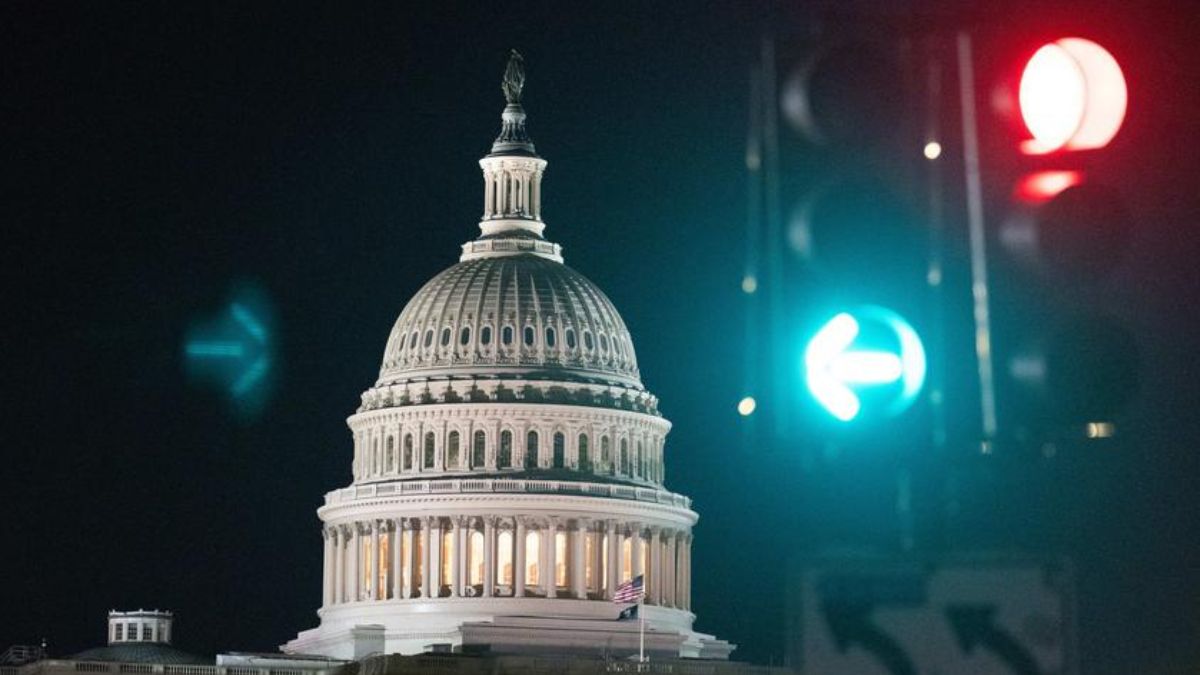
U.S. lawmakers push anti-China bills amid election posturing
One such proposal seeks to reinstate the controversial Trump-era China Initiative, despite its previous criticism as a "witch hunt" against Asian scholars.

Stay updated with the latest news and articles about U.S.
One such proposal seeks to reinstate the controversial Trump-era China Initiative, despite its previous criticism as a "witch hunt" against Asian scholars.

The candidates vying for leadership of the CDP have signalled their intention to challenge the pact, aligning with public sentiment that Japan should have greater jurisdiction over U.S. military operations.
A multi-year project, set to run from 2023 to 2025, has been launched to ensure the upkeep of the RF-5’s camera and avionics systems, with a budget of NT$33 million (US$1.03 million).
The ambassador’s warning comes at a time of increasing tension between the two superpowers, with recent geopolitical developments and military posturing exacerbating fears of potential conflict.
Greene noted that enhancing Taiwan’s resilience would not only benefit the country but also strengthen global security and prosperity.
The speculation around U.S. involvement arose after Dale Jieh, a former Taiwanese envoy to New Zealand, suggested during a televised talk show that AIT would step in if the investigation continued.
Nippon Steel and U.S. Steel in their letter argued that the merger would benefit both nations by strengthening their economic partnership.
China's response to external pressures, leveraging its substantial talent pool, scientific resources, and robust commercial market, has consistently demonstrated resilience. The nation's progress in space exploration, for example, underscores its capacity to thrive despite international attempts to isolate it.
The ministry's evaluation points to various issues, including the disruption of the multilateral trading system, unilateral trade bullying, and the application of double standards in industrial policies by the United States.
The newly passed bills are criticised as a continuation of the "China threat" narrative, which some argue reflects outdated Cold War-era thinking and ideological biases.
Showing 40 of 183 articles