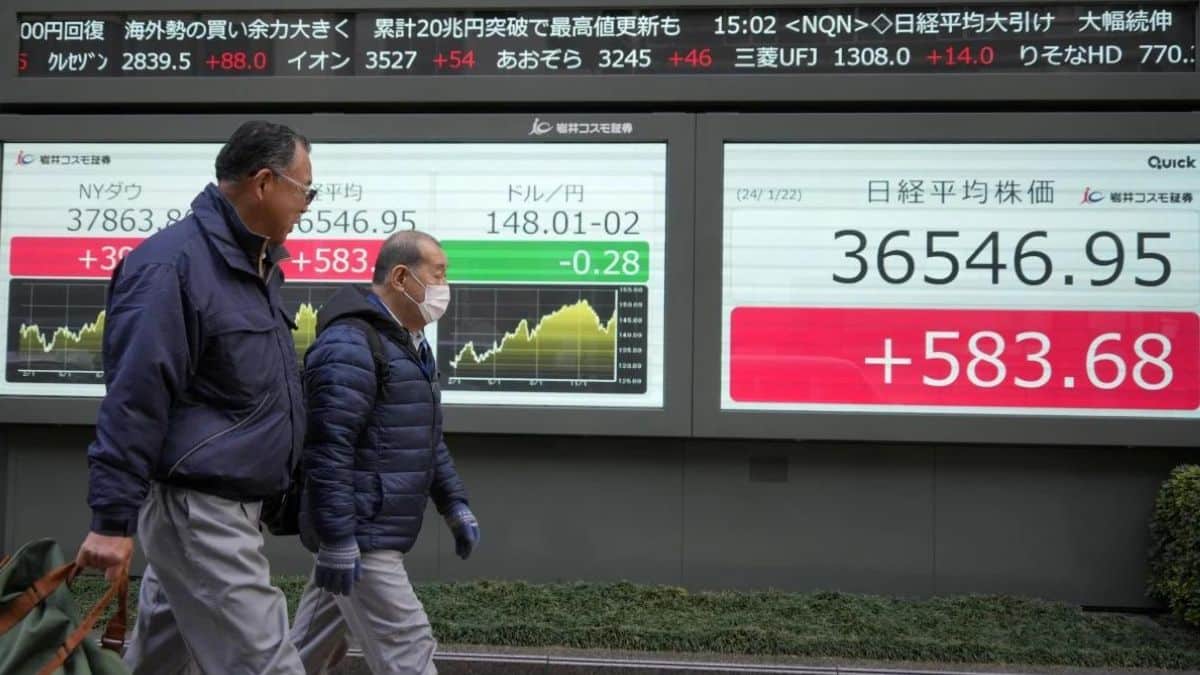
Asian markets : Japan Stock Indices See Mixed Performance, Japan 225 Drops 0.33%
Japan's major stock indices showed mixed responses today, with the Japan 225 Index declining by 0.33%, while the TOPIX Index remained flat at 2,741.29 JPY.

Stay updated with the latest news and articles about Topix index.
Japan's major stock indices showed mixed responses today, with the Japan 225 Index declining by 0.33%, while the TOPIX Index remained flat at 2,741.29 JPY.

The Nikkei 225 fell by 1.2%, closing at 32,500, while the broader Topix index dropped 0.9%, following similar trends in international markets
The yen’s strength intensified as the US Federal Reserve is anticipated to announce a 0.5% rate cut at the ongoing Federal Open Market Committee (FOMC) meeting. This expected reduction would narrow the interest rate differential between Japan and the US, pushing the yen to a high of 139 per dollar—its strongest level in over a year. Although the yen has recently settled in the high 140s per dollar, the threat of further appreciation remains, prompting heavy selling of export-driven stocks like Toyota. The impact of a stronger yen is feared to erode profitability for exporters, exacerbating market volatility.
During the second week, the yen appreciated amid expectations of a domestic interest rate hike, which led to a decline in Japanese stocks. The Tokyo Stock Price Index (TOPIX) fell by 1% over the week. Market participants are expected to remain cautious in the first half of the third week as they monitor currency fluctuations.
The yen's temporary rise to the 140 yen range against the dollar exacerbated the sell-off, particularly impacting export stocks. The market was further pressured by perceptions from a U.S. presidential debate, where Democratic candidate Kamala Harris was viewed as having an edge over Republican incumbent Donald Trump. The speculation that Trump might lose, potentially affecting his promise of lower corporate tax rates, fueled concerns and led to increased selling by overseas speculators.
The Nikkei Stock Average and the Tokyo Stock Price Index (TOPIX) both recorded their largest declines since August 5, a day marked by significant global market volatility. This latest selloff was precipitated by the Institute for Supply Management’s (ISM) report on August’s manufacturing activity, which revealed a contraction for the fifth consecutive month, falling short of market expectations. Particularly hard-hit were technology stocks in the U.S., including Nvidia, which saw its shares plummet, erasing $278.9 billion in market value—an unprecedented drop for a single U.S. stock.
The Nikkei 225, a key benchmark of Japan’s stock market, closed marginally lower, reflecting investor caution amid ongoing concerns over global economic conditions and sector-specific challenges. Semiconductor stocks, which have been a major focus for investors due to their pivotal role in the global supply chain, were notably weaker. The sector's decline was attributed to a combination of factors, including persistent supply chain issues and reduced demand forecasts, which have led to a sell-off in related stocks.
The session began with a hawkish tone from Ueda during parliamentary testimony, where he hinted at possible future interest rate hikes if inflation continues to rise.
The mixed performance in the Asia-Pacific region mirrored the mixed closing on Wall Street overnight. Tech giants such as Nvidia, Meta (formerly Facebook), and Apple saw declines, with the S&P 500 closing 0.19% lower and the Nasdaq Composite losing 0.54%. In contrast, the Dow Jones Industrial Average managed to edge higher by 0.1%.
The world's second-largest economy, facing declining exports for the first time in seven years, cast a shadow over its neighbors, despite pockets of resilience like Japan's record-breaking rally.