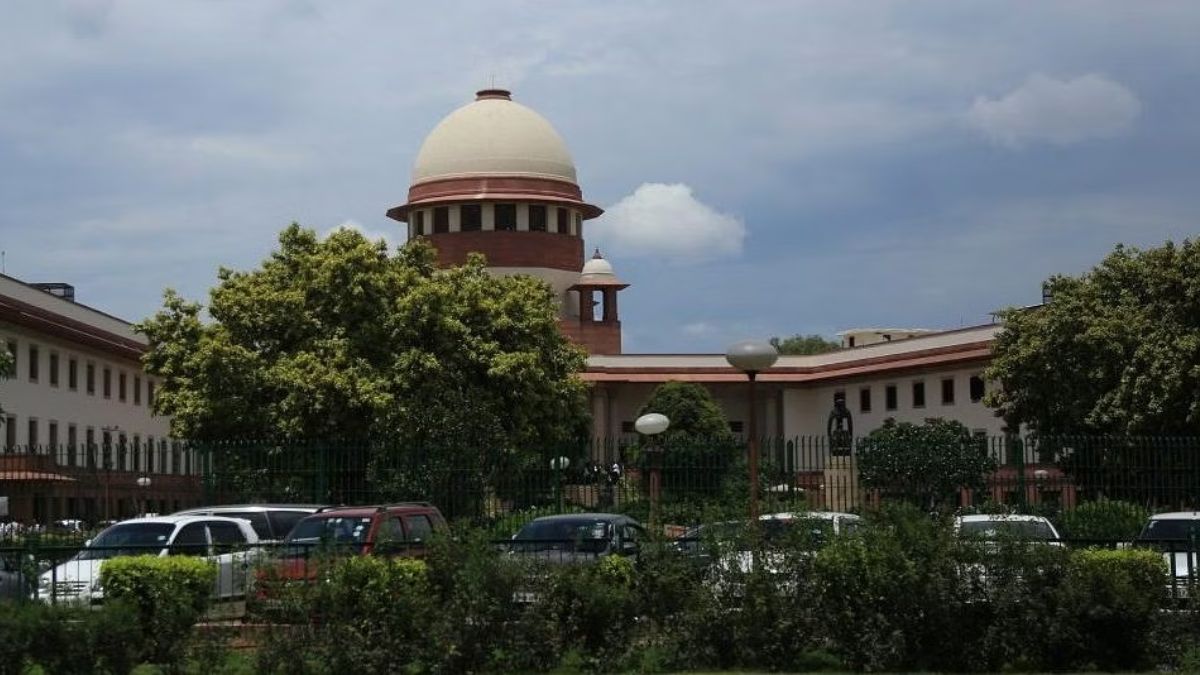
Supreme Court rules foreign judgments contrary to Indian law not binding
The case in question involved a dispute where one party sought to enforce a foreign court's judgment in India.

Stay updated with the latest news and articles about Supreme Court of India.
The case in question involved a dispute where one party sought to enforce a foreign court's judgment in India.

K Kavitha, the daughter of Telangana Chief Minister K Chandrashekar Rao, approached the Supreme Court after a lower court denied her bail, citing the seriousness of the charges.
However, the Supreme Court, led by a bench led by CJI DY Chandrachud comprising Justices JB Pardiwala and Manoj Misra rejected the plea, affirming the UGC’s authority to ensure a fair and equitable examination process.
The case in question involved a dispute over whether certain disclosures made by the accused could be used to corroborate other evidence presented by the prosecution.
A bench led by Justice A.S. Bopanna heard the pleas, which highlighted the severe challenges faced by families in affording the expensive and lifelong treatment required for Muscular Dystrophy.
The apex court emphasized that such remarks could undermine the authority of higher courts and disrupt the judicial hierarchy.
"The Supreme Court has laid down various guidelines regarding paper leak," stated Advocate Sailakwal.
"The Supreme Court, in its judgment, has highlighted all the deficiencies in the structural processes of the NTAs. We cannot afford this for the betterment of the students," the court stated.
The Court's ruling comes in response to a series of petitions challenging the states' powers to sub-divide SC and ST categories.
The Supreme Court's order was issued during a hearing on a Public Interest Litigation (PIL) that challenged the quality and regulatory compliance of certain Patanjali products.
Showing 10 of 15 articles