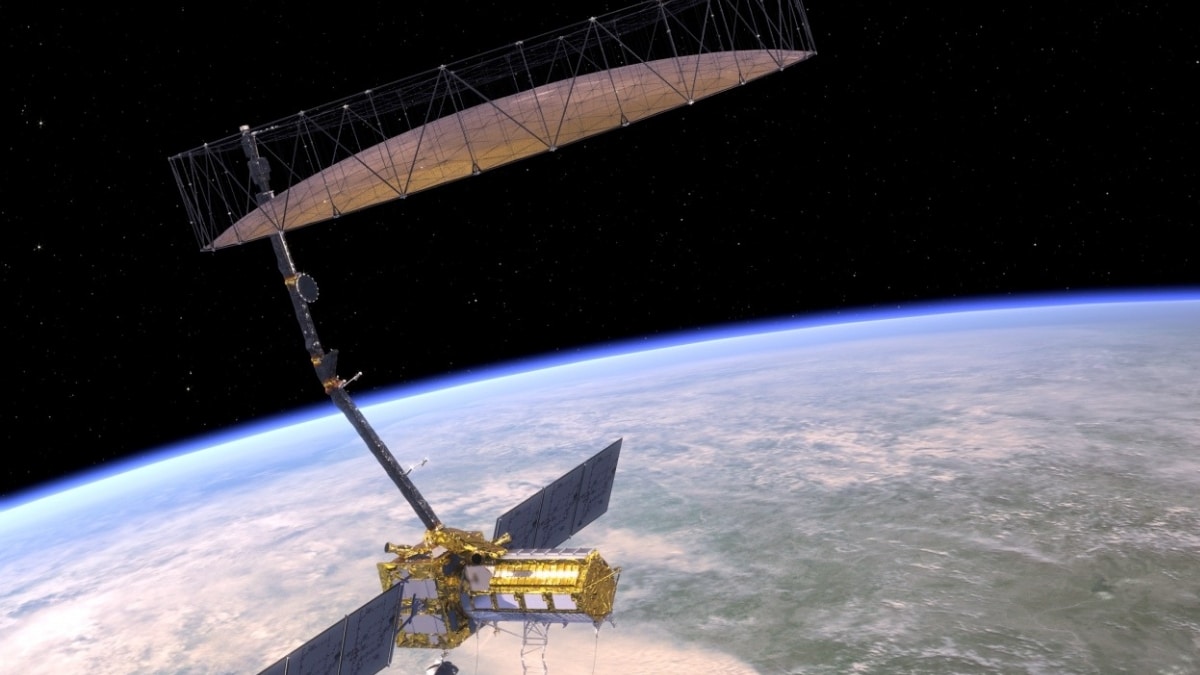
NISAR launch delayed until 2025: A setback for Earth observation
NISAR, a collaborative project between NASA and the Indian Space Research Organisation (ISRO), aims to revolutionize Earth observation with its advanced radar technology.

Stay updated with the latest news and articles about Space technology.
NISAR, a collaborative project between NASA and the Indian Space Research Organisation (ISRO), aims to revolutionize Earth observation with its advanced radar technology.

China has completed a long-range test of a three-stage liquid hydrogen-oxygen engine for its new generation manned launch vehicle.
China has successfully completed a 10 km vertical takeoff and landing test of its reusable rocket, marking a significant advancement in space technology. This breakthrough paves the way for more cost-effective and frequent space missions.
Japan's XRISM (X-ray Imaging and Spectroscopy Mission) satellite, a collaborative effort with NASA and ESA, marks a significant leap in space exploration.
In a previous attempt in July, LandSpace became the world's first company to launch a methane-liquid oxygen rocket, even without real satellites. This achievement positioned them ahead of their U.S. rivals, including SpaceX and Blue Origin.
While space-based technology is invaluable for many purposes, it does have limitations when it comes to instantaneous detection of small-scale, fast-moving events, like rocket attacks launched by non-state actors.
At 10 am, TV-D1 successfully took off, and the payloads landed in the sea as per the planned trajectory. The test mission has been officially declared a success.