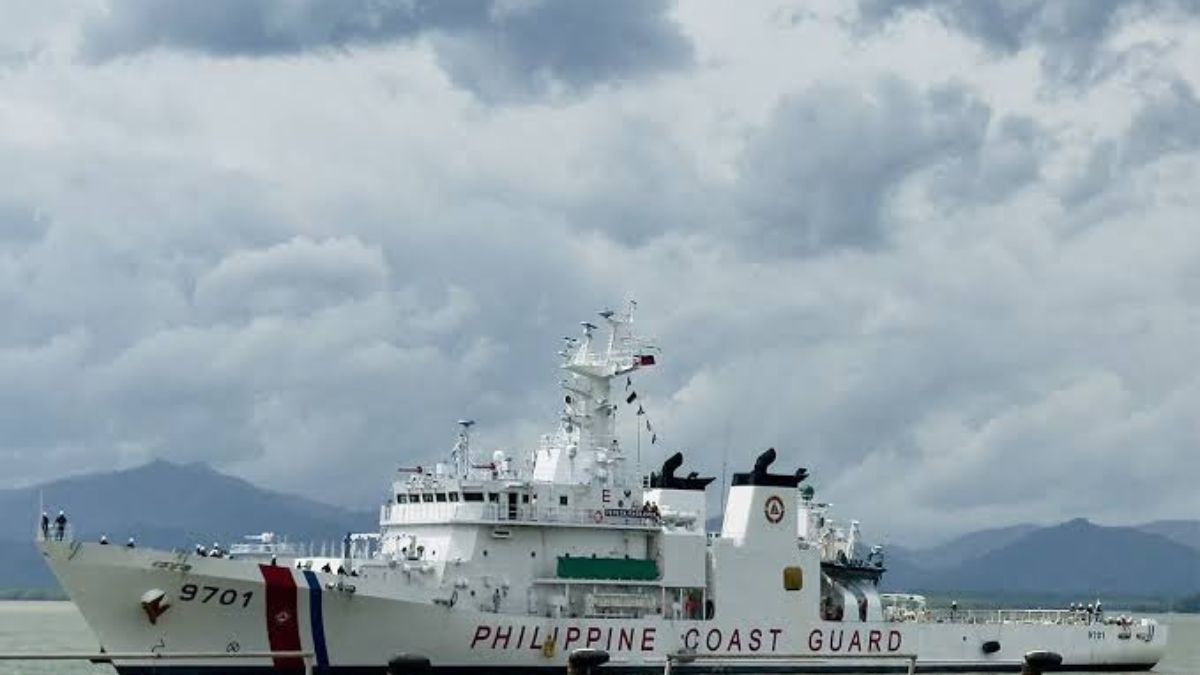
Philippines withdraws ship from China’s Xianbin Jiao
China has deemed the withdrawal as a positive development for de-escalating tensions at Xianbin Jiao.

Stay updated with the latest news and articles about Manila.
China has deemed the withdrawal as a positive development for de-escalating tensions at Xianbin Jiao.

Yang Xiao, deputy director at the Institute of Maritime Strategy Studies under the China Institute of Contemporary International Relations, suggested that the Philippines is aiming to solidify its occupation of Xianbin Jiao by upgrading the floating platform to a more permanent structure, which could serve as a forward deployment base.
The joint exercises involved naval maneuvers, maritime patrols, and search and rescue operations, reflecting the growing strategic partnership between Manila and Tokyo.
Chinese Foreign Minister Wang Yi and Philippine Foreign Secretary Enrique Manalo convened in Vientiane.
Resolution No. 494 was enacted by the City Council of Manila, formally declaring a state of disaster over Manila.
Local authorities, including environmental agencies and disaster response teams, are coordinating rescue missions and environmental cleanup operations amidst challenging weather conditions.
Beijing and Manila have commenced high-level talks to defuse escalating tensions in the South China Sea. The discussions aim to promote peaceful resolution and strengthen bilateral relations amid ongoing maritime disputes.
Beijing's call to Manila emphasizes commitment to resolving Ren'ai Reef dispute peacefully, urging adherence to agreements and dialogue. Prioritizing diplomacy over provocations is crucial for stability in the South China Sea.
Tensions rise as China closely monitors Philippine activities near Ren'ai Jiao in the South China Sea, with analysts suggesting the Philippines seeks international attention and economic benefits.
The A class submarine was developed in 1911 from the Plunger-class submarines, which played a significant role in the early development of the U.S. Navy's quiet service. Their pre-war midget design, which was based in the Philippines, had an Electro Dynamic electric motor, an Otto petrol engine, and a 60-cell battery.
Showing 10 of 14 articles