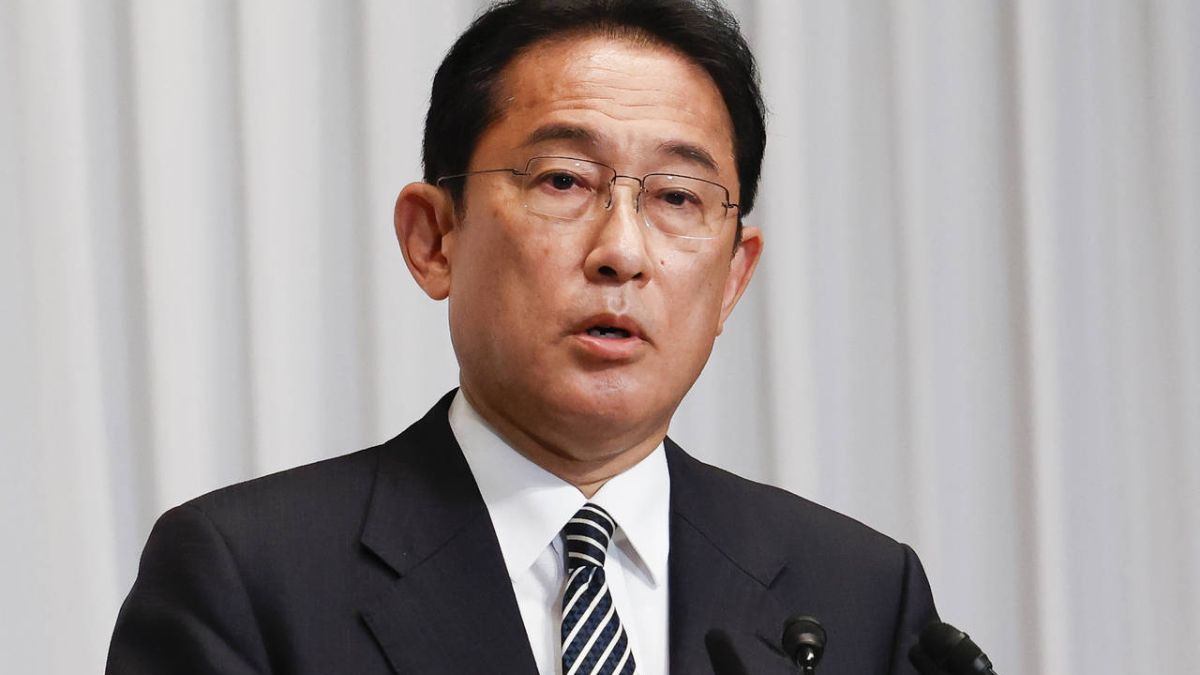
Japan retains positive economic outlook amid corporate resilience
Corporate earnings have remained robust, largely thanks to capital expenditure projects, particularly in the high-tech and sustainable energy sectors.

Stay updated with the latest news and articles about Japan PM Kishida.
Corporate earnings have remained robust, largely thanks to capital expenditure projects, particularly in the high-tech and sustainable energy sectors.

Takaichi, a long-time LDP politician and the first woman to hold the economic security portfolio, garnered the most support in the survey, surpassing other key figures within the party.
According to an Asahi Shimbun report, meetings between Abe, then-Policy Research Council Chairman Fumio Hagiuda, former Defense Minister Nobuo Kishi, and the Unification Church's leadership occurred in the LDP's President’s Room in late June 2013. In response to inquiries about these claims, Kishida affirmed that his prior statements on the issue remain unchanged, asserting that no new information warrants further discussion at this time.
The rise is driven by a combination of factors, including longer life expectancy and declining birth rates. The National Institute of Population and Social Security Research projects that by 2040, the elderly will account for over 35% of the population, further exacerbating the country's demographic imbalance.
Key topics on the agenda included regional security concerns, economic cooperation, and ongoing territorial disputes.
The planned research centre has sparked concerns that China may use this academic initiative to further assert influence over Okinawa, home to key U.S. military bases and a crucial component of Japan’s national security.
The heightened geopolitical competition comes as China extends its influence through economic investments, infrastructure development, and security pacts, such as its recent agreement with the Solomon Islands.
Kishida’s assurance came as a reassurance to Yoon amidst Japan’s ongoing political transitions and the anticipated leadership changes in the coming years.
In his opening remarks, President Yoon emphasized that the forthcoming year, which will mark the 60th anniversary of the normalization of diplomatic ties between Japan and South Korea, presents a pivotal opportunity to elevate their relationship to a new level. Yoon described the progress achieved during Prime Minister Kishida’s tenure as president as the most notable improvement in their diplomatic relations since he assumed office.
Motegi outlined that while the objectives of enhancing national defense and bolstering childcare support remain crucial, the methods of financing these initiatives are set to change. He proposed leveraging non-tax revenues, specifically utilizing foreign currency assets from the "Foreign Exchange Fund Special Account," to mitigate the impact of sudden exchange rate fluctuations. This approach represents a departure from the Kishida administration's strategy of raising taxes to fund these critical areas.
Showing 10 of 26 articles