
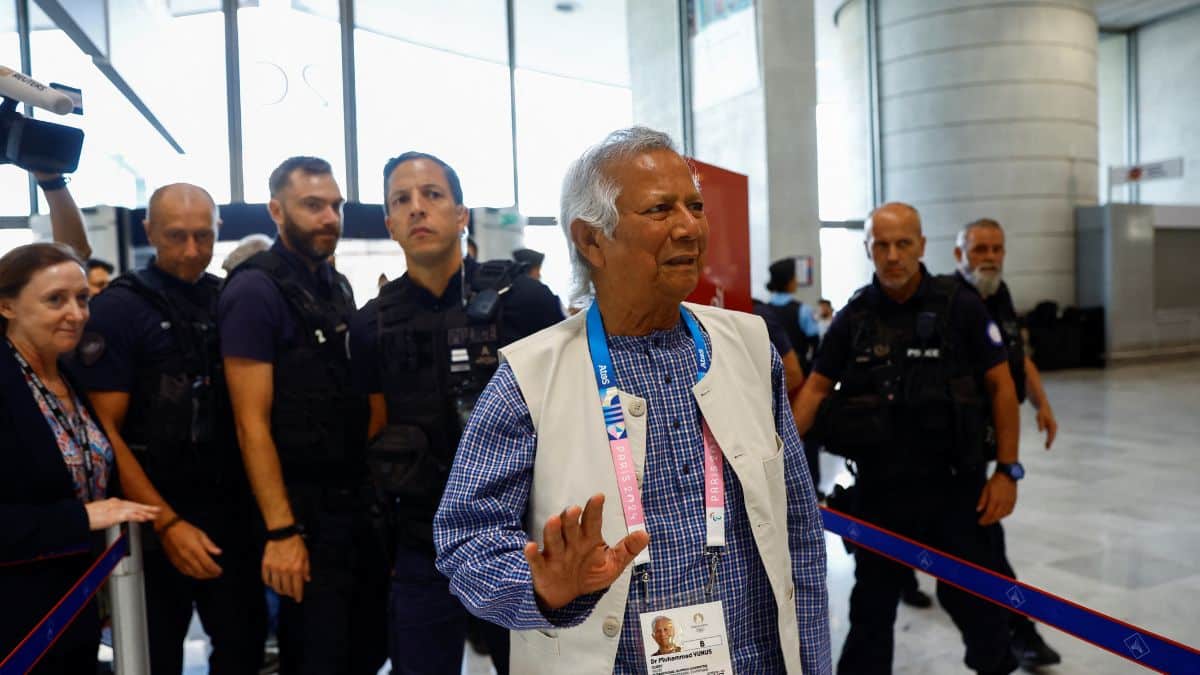
Nobel Peace Prize laureate Dr Muhammad Yunus has returned to Bangladesh to take the helm of an interim government, a move aimed at steering the country through a period of intense political turmoil. The decision to appoint Dr Yunus, a globally respected figure and pioneer of microfinance, comes as Bangladesh grapples with escalating tensions and a polarized political landscape.
Dr Yunus’s arrival in Dhaka has been met with cautious optimism by various political factions, who view his leadership as crucial for restoring stability and ensuring a fair electoral process. The interim government, under his guidance, is expected to focus on establishing a neutral environment conducive to holding free and fair elections, a critical step in resolving the ongoing political crisis.
The political impasse in Bangladesh has intensified in recent months, with Prime Minister Sheikh Hasina’s government facing mounting pressure from opposition parties and civil society groups. These groups have accused the government of undermining democratic processes and have called for the establishment of an interim administration to oversee the upcoming general elections. Dr. Yunus, known for his integrity and independence, has been widely regarded as a suitable candidate to lead this transition.
Sajeeb Ahmed Wazed, the son of Prime Minister Hasina and a key figure in the ruling Awami League party, responded to Dr Yunus’s appointment with a call for dialogue. “The party has not given up,” Wazed stated, signalling the ruling party’s willingness to engage in discussions with both the opposition and the interim government. Wazed’s comments suggest a potential opening for negotiations, which could ease political tensions and pave the way for a more inclusive political process.
Dr Yunus’s interim government leadership is expected to focus on fostering national unity and building consensus among the country’s diverse political and social groups. His reputation as a champion of social justice and economic empowerment may prove instrumental in bridging the deep divisions that have plagued Bangladeshi politics.
The international community is closely monitoring developments in Bangladesh, with several countries and organizations expressing support for Dr Yunus’s leadership. The success of the interim government under his stewardship is seen as critical not only for Bangladesh’s domestic stability but also for its standing on the global stage as a functioning democracy.