
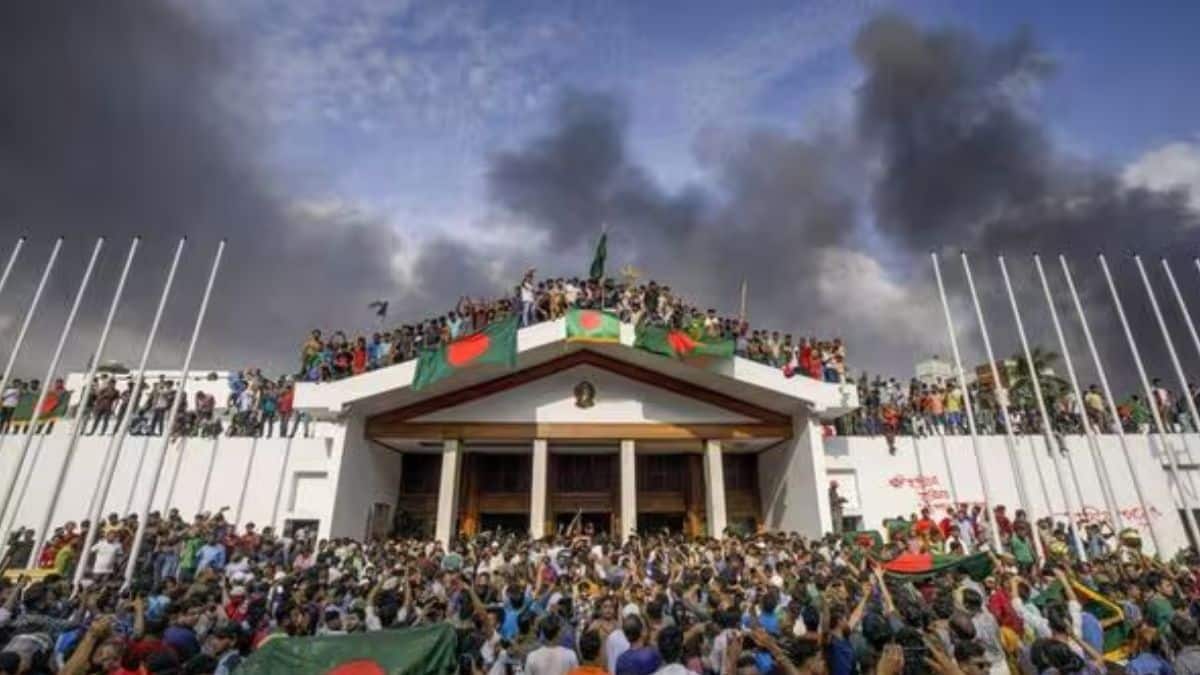
Bangladesh, once celebrated as the world’s fastest-growing economy, is grappling with severe economic challenges that have led to widespread unrest and political turmoil. The student protests that forced Prime Minister Sheikh Hasina to resign and flee the country were driven by dire economic conditions that have plagued the nation.
Under Hasina’s leadership, Bangladesh has encountered serious economic problems, such as a considerable increase in its current account deficit, a drop in the value of the taka, and a reduction in foreign exchange reserves. These economic troubles have been exacerbated by the global rise in fuel and food prices, following the Russia-Ukraine war, which led Bangladesh to seek a $4.7 billion bailout from the International Monetary Fund (IMF) last year.
The country’s economy heavily relies on its ready-made garments sector, which is the third-largest clothing exporter globally. However, rising living costs have sparked protests from garment workers demanding higher wages. These protests reflect broader discontent, as nearly 32 million young people are either unemployed or out of education in a population of 170 million.
Recent developments highlight the severity of Bangladesh’s economic struggles. In July, the central bank maintained its interest rates at 8.5% after two earlier increases. Inflation stood at 9.72% in June, with the central bank aiming to reduce it to 6.5% by fiscal 2025. The country’s GDP growth for the January-March quarter was reported at 6.1%, but the IMF’s recent report suggests a projected growth rate of 5.4% for the fiscal year 2024, an improvement from the 4.8% recorded in the first half of the year.
The IMF’s second review in June granted Bangladesh immediate access to approximately $928 million in economic support loans and about $220 million to address climate change. Despite these measures, the economic outlook remains precarious, with ongoing challenges in managing inflation, unemployment, and political instability.