
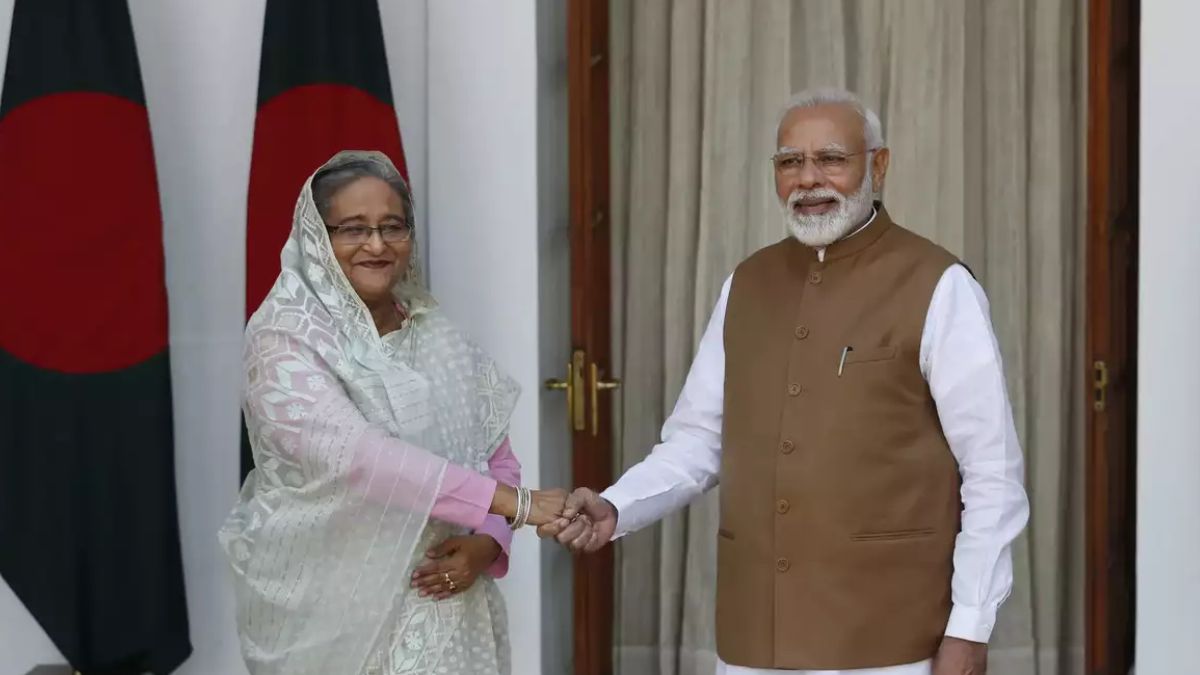
India’s trade surplus with Bangladesh has taken a significant hit due to the ongoing economic crisis in the neighbouring country, raising concerns over the impact on bilateral trade relations. Bangladesh, one of India’s largest trading partners in South Asia, is grappling with a severe economic downturn characterized by high inflation, dwindling foreign reserves, and a weakening currency, all of which have led to a sharp decline in its import capacity.
India, which traditionally enjoys a substantial trade surplus with Bangladesh, has begun to feel the effects of this crisis. Key Indian exports, including automobiles, machinery, and chemicals, have seen a marked decrease in demand as Bangladesh struggles to manage its economic challenges. The decline in imports is attributed to the country’s efforts to stabilize its economy by reducing outflows of foreign currency and prioritizing essential imports over non-essential goods.
According to recent data, India’s trade surplus with Bangladesh has shrunk by approximately 20% in the first half of 2024. This downturn is particularly concerning given the strong trade relationship that has historically existed between the two nations. In the fiscal year 2023-24, India’s exports to Bangladesh amounted to over $15 billion, with a wide range of goods flowing across the border. However, the current crisis has cast a shadow over the future trajectory of this trade partnership.
Experts warn that the situation could worsen if Bangladesh’s economic woes persist. The reduction in trade not only affects India’s export earnings but also has broader implications for the region’s economic stability. Indian exporters, particularly those in sectors heavily reliant on the Bangladeshi market, are being advised to explore alternative markets to mitigate the risk of prolonged downturns.
The Indian government, aware of the potential long-term impact, is reportedly in discussions with Bangladeshi officials to explore ways to support the country’s economic recovery. These discussions may include measures to boost bilateral trade, such as providing credit lines or technical assistance to key industries in Bangladesh.
As Bangladesh works to navigate its economic crisis, the ripple effects on India’s trade surplus underscore the interconnectedness of the region’s economies. The situation serves as a reminder of the vulnerabilities in cross-border trade relationships, particularly when one partner faces significant economic challenges. Going forward, the resilience of India-Bangladesh trade ties will depend on both countries’ ability to adapt to changing economic circumstances and find mutual solutions to sustain their partnership.