
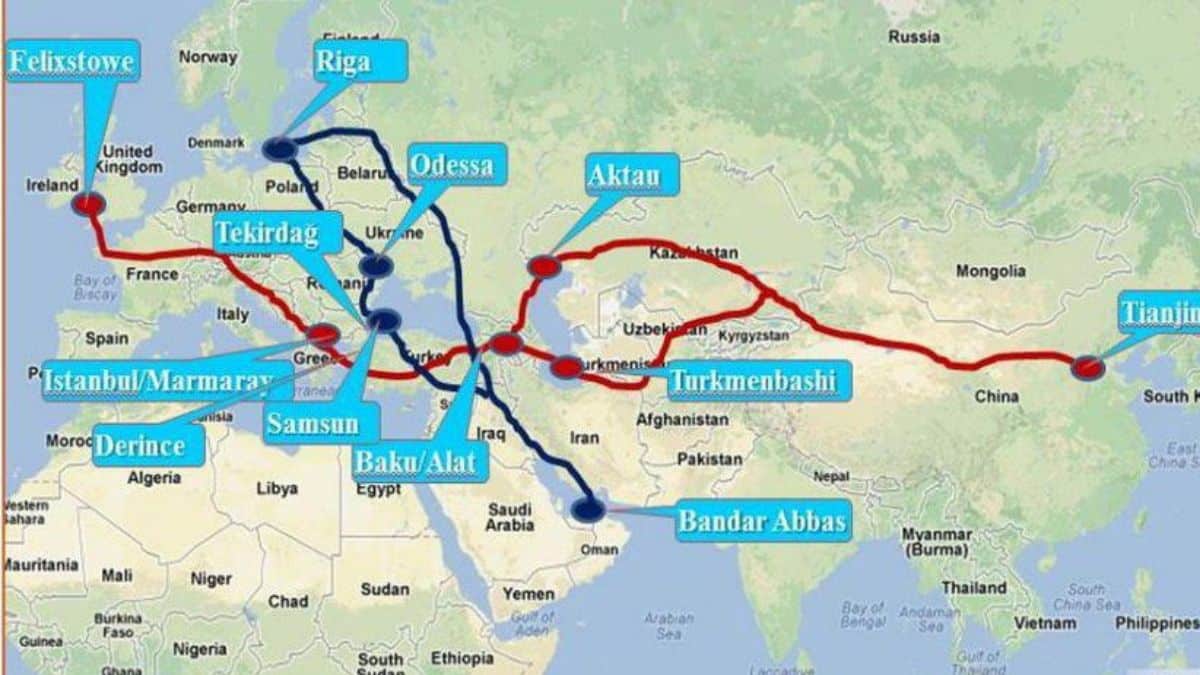
Ankara, Turkey, played host to the Working Group and General Meeting of the International Association “Trans-Caspian International Transport Route” (TITR), marking a pivotal moment for the strategic corridor. During these meetings, plans and tariffs for 2024 were approved, and discussions unfolded regarding future initiatives aimed at fortifying operational capabilities and expanding the route network.
The Trans-Caspian International Transport Route, also known as the Middle Corridor, demonstrated remarkable growth in 2023, witnessing the transportation of over 2.7 million tons of goods—an 86 per cent surge compared to the previous year. This surge in activity underscores the corridor’s increasing prominence as a key conduit for trade and logistics between Asia and Europe.
Anticipating continued momentum, the projected cargo volume for 2024 stands at 4 million tons, signifying the region’s commitment to further harnessing the potential of the Middle Corridor. The corridor’s strategic significance lies in its role as an alternative route to the traditional Northern and Southern Corridors, offering a more direct land route that links the eastern parts of Asia, including China, with Europe.
The Middle Corridor’s route spans a vast geography, commencing in China and traversing Central Asian nations such as Kazakhstan, Uzbekistan, and Turkmenistan. Crossing the Caspian Sea, the corridor proceeds through Azerbaijan, Georgia, and Turkey before reaching its European destinations. This comprehensive route strategically connects diverse regions and contributes to the economic integration of the participating countries.
The appeal of the Middle Corridor lies in its efficiency as a land route, circumventing the longer maritime alternatives. By offering a direct path, it facilitates faster and more cost-effective transportation of goods between Asia and Europe. This not only enhances trade connectivity but also positions the corridor as a valuable asset in the global supply chain.
The adoption of plans and tariffs for 2024 reflects a coordinated effort to streamline operations and ensure the continued success of the Middle Corridor. Additionally, the discussions on future initiatives underscore the commitment to adapting and expanding the route network to meet evolving trade demands and enhance overall connectivity.
As the Middle Corridor continues to gain traction, Ankara’s role in hosting these critical meetings reinforces Turkey’s commitment to fostering international cooperation and economic development through improved transportation infrastructure. The positive trajectory of the Trans-Caspian International Transport Route sets the stage for increased collaboration among the participating nations, fostering economic growth and strengthening ties between Asia and Europe.