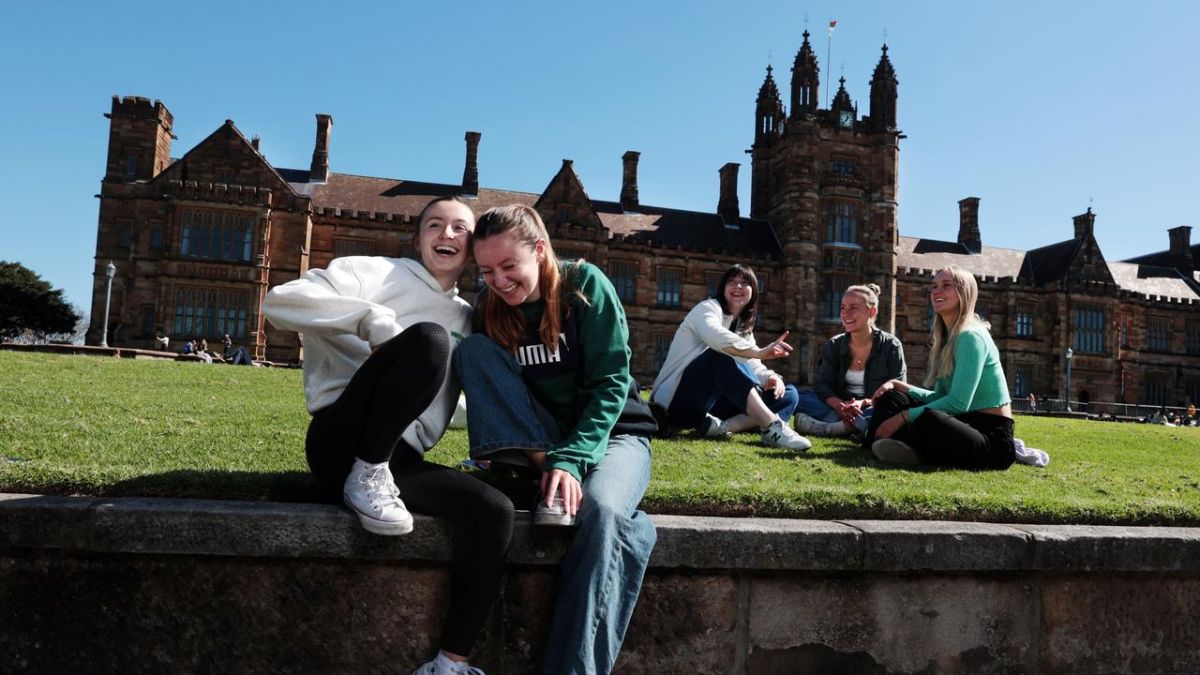
Australia to cap foreign student numbers in 2025 as part of migration crackdown
The move is intended to balance the growing influx of foreign students with the need to ensure that local students have adequate access to educational...

Get comprehensive coverage of Features, including latest updates, analysis, insights, and expert commentary.
The move is intended to balance the growing influx of foreign students with the need to ensure that local students have adequate access to educational...

The Fore River Shipbuilding Company's C-class submarines, built between 1906 and 1909, represented a significant development in American naval technology. With a two-shaft propulsion system, they demonstrated increased speed.
Serving in the Philippines from 1912 to 1915 were the B-class submarines built by Fore River Shipbuilding for the U.S. Navy. At 82.5 feet in length, with a maximum speed of 9 knots, and two bow torpedo tubes, these submarines were efficient despite their small size. They were decommissioned between 1919 and 1922 and used as targets again.
The A class submarine was developed in 1911 from the Plunger-class submarines, which played a significant role in the early development of the U.S. Navy's quiet service. Their pre-war midget design, which was based in the Philippines, had an Electro Dynamic electric motor, an Otto petrol engine, and a 60-cell battery.
A turning point in naval innovation was the USS Holland (SS-1), the US Navy's first modern submarine. When it was launched in 1897, it displayed innovative technology and design. During its 1900–1905 service, it invented submarine tactics and technology.
Launched amid the Civil War in 1862, the USS Alligator signalled a turning point in naval warfare. Equipped with limpet mines, this revolutionary submarine demonstrated the latest developments in underwater technology.
The ballistic missile submarine USS Florida (SSGN-728), an Ohio-class vessel, experienced a major conversion to a cruise missile submarine. It has a submerged displacement of 18,750 tonnes and is equipped with 154 Tomahawk missiles, demonstrating its powerful striking capability.
Designed in 1979 by General Dynamics, the USS Georgia (SSBN-729/SSGN-729) is an Ohio-class submarine. Having been launched in 1982, the fleet ballistic missile submarine started to function in 1984. Despite mishaps during its service, the USS Georgia was praised for its strong weapons. It was an essential part of strategic deterrence patrols.
Under the Myanmar Navy, the UMS Minye Theinkhathu (previously INS Sindhuvir) is a Kilo-class submarine. It has a range of 6000 nautical miles and measures 72.6 metres in length, 3076 tonnes in submerged weight, and sophisticated sensor systems.
As part of the Advanced Technology Vessel programme, India's INS Arihant, the lead ship of the nuclear-powered Arihant class ballistic missile submarines, was launched in 2009.
The fourth submarine in India's Kalvari-class, designated INS Vela (S24), was delivered on November 9, 2021, and put into service on November 25, 2021. Its 1,615-ton displacement, 533-millimeter torpedo tubes, DRDO PAFC Fuel Cell AIP system, and crew of 35 sailors and 8 officers are its notable features.
A key component of the Indian Navy, the Kilo-class submarine INS Sindhurakshak made significant contributions to the 1999 Kargil War. In 2013, following major renovations, it encountered difficulties, including a storm in the Mediterranean and a deadly explosion in Mumbai, which resulted in its sinking.
Leading-edge stealth technology and a flexible armament system characterise the sixth Kalvari-class submarine commissioned for the Indian Navy, INS Vagsheer (S26). Reaching speeds of 20 knots, it can function underwater for 50 days.
Originally planned to be completed in 2024, the ATV project had delays in its 2017 launch. Its armament, testing capabilities down to 400 metres, and remarkable speeds all contribute to its strategic significance, even with just one CLWR-B1 reactor.
In February 15, 2021, after it was launched, it was given to the Indian Navy. On March 10, 2021, in Mumbai, the Chief of Naval Staff Admiral Karambir Singh and Admiral (Retired) VS Shekhawat graced the commissioning event.
Officially launched on November 12, 2020, the submarine honours its predecessor, INS Vagir (S41), which was named after a unique type of sandfish and tirelessly served the Navy from 1973 until 2001.
The fourth submarine in India's Kalvari-class, designated INS Vela (S24), was delivered on November 9, 2021, and put into service on November 25, 2021. Its 1,615-ton displacement, 533-millimeter torpedo tubes, DRDO PAFC Fuel Cell AIP system, and crew of 35 sailors and 8 officers are its notable features.