

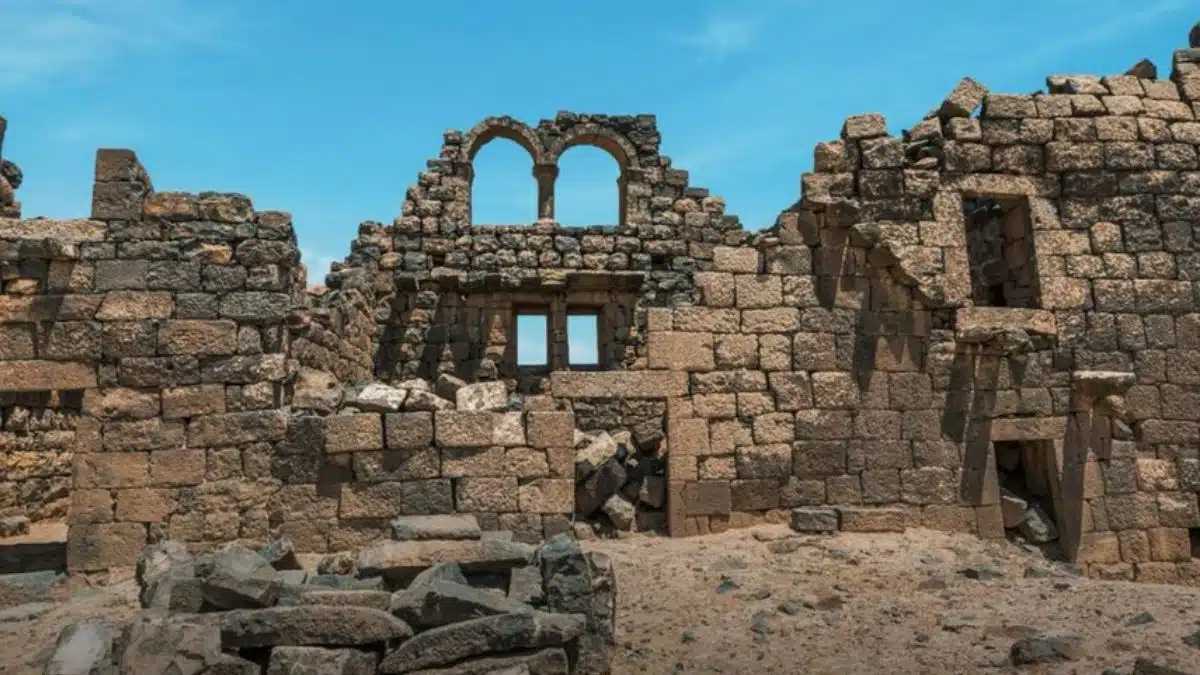
Umm al-Jimal, a historic village in northern Jordan, has been inscribed on UNESCO’s World Heritage List. This prestigious designation, announced at the recent World Heritage Committee session, underscores the site’s exceptional value and historical significance.
Umm al-Jimal, meaning “Mother of Camels” in Arabic, boasts a rich tapestry of history and architecture that dates back to the Roman period. The village is renowned for its well-preserved ancient structures, including intricate basalt stone buildings, which reflect a fusion of Nabataean, Roman, Byzantine, and early Islamic influences. These architectural treasures offer a rare glimpse into the region’s diverse historical phases and cultural interactions.
The site’s archaeological landscape is particularly noteworthy for its unique urban layout and infrastructure. Featuring remnants of an ancient city with streets, houses, and public buildings, Umm al-Jimal showcases an advanced understanding of urban planning and adaptation to the arid environment. The village’s numerous archaeological finds, including inscriptions and artifacts, provide invaluable insights into the lives of its former inhabitants and their socio-economic structures.
This recognition is expected to boost tourism and generate greater international interest in Jordan’s historical sites, contributing to both cultural preservation and economic development. Efforts will now focus on protecting the site from potential threats while ensuring that its historical integrity is maintained for future generations.