
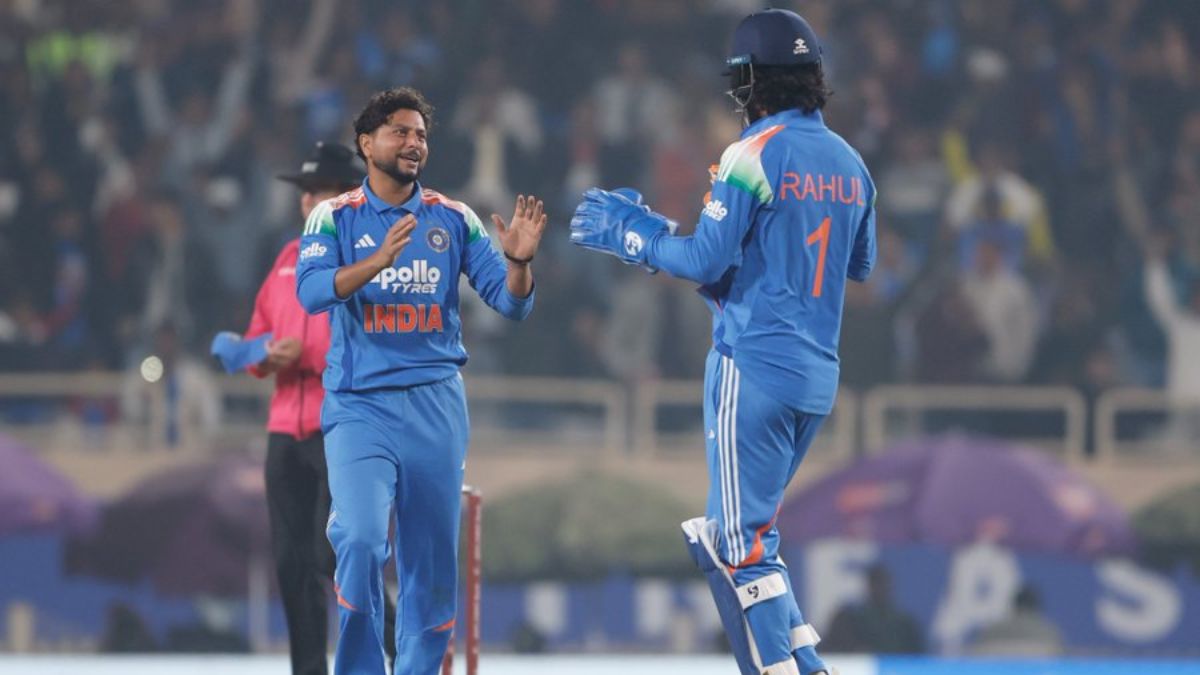
A rare moment unfolded during the 34th over of South Africa’s chase in the first ODI in Ranchi, when the match officials were forced to change the ball twice. Many fans immediately wondered why this happened, especially because – after the 34th over – the fielding side is allowed to choose one replacement ball for the rest of the innings.
Why Was the Ball Replaced?
As per the umpires, the original match ball had become too wet and unusable, making it difficult for the bowlers to grip and for the fielding side to maintain the required condition. A wet ball also affects swing, bounce, and visibility under lights.
Why Did India Not Choose Their Own Ball?
Even though teams can opt for a preferred replacement ball after the 34-over mark, that choice applies only when the ball is lost or cannot be retrieved.
In this case:
-
The ball was not lost.
-
The umpires determined that the ball was unfit for use due to wetness, likely from dew and field conditions.
-
Therefore, the fielding team cannot select their “reserved” ball.
-
Under the laws, umpires must choose the replacement ball themselves, matching the wear and age of the original.
Why Two Ball Changes?
Because the first replacement ball also turned out to be unsuitable, the umpires had to inspect and provide another ball that matched the condition of the innings.
What the Rule Says
Under MCC Laws and ODI playing conditions:
-
After over 34, the fielding side may choose one ball if the match ball goes missing.
-
But if the ball is damaged, wet, or unfit, the umpires alone select a replacement.
This is exactly what happened in Ranchi.
